Day One
Monday, 2 February 2026 • Arrival, City Walk & Trinity College
By 07:15 on Monday 2 February 2026, the departure hall of Brussels Airport was already buzzing as our group gathered with bags packed and ready to begin a week in Dublin.
Early morning
Students began arriving at Brussels Airport just after 07:00. The meeting point was the Panos shop in the departure hall. Soon enough, the whole group was assembled and teachers Gene Vangampelaere and Christophe Laprudence were ready to get everyone checked in.
Students who had only ever exchanged a few words in corridors back on campus found themselves chatting freely and discussing the week ahead.
Landing in Dublin
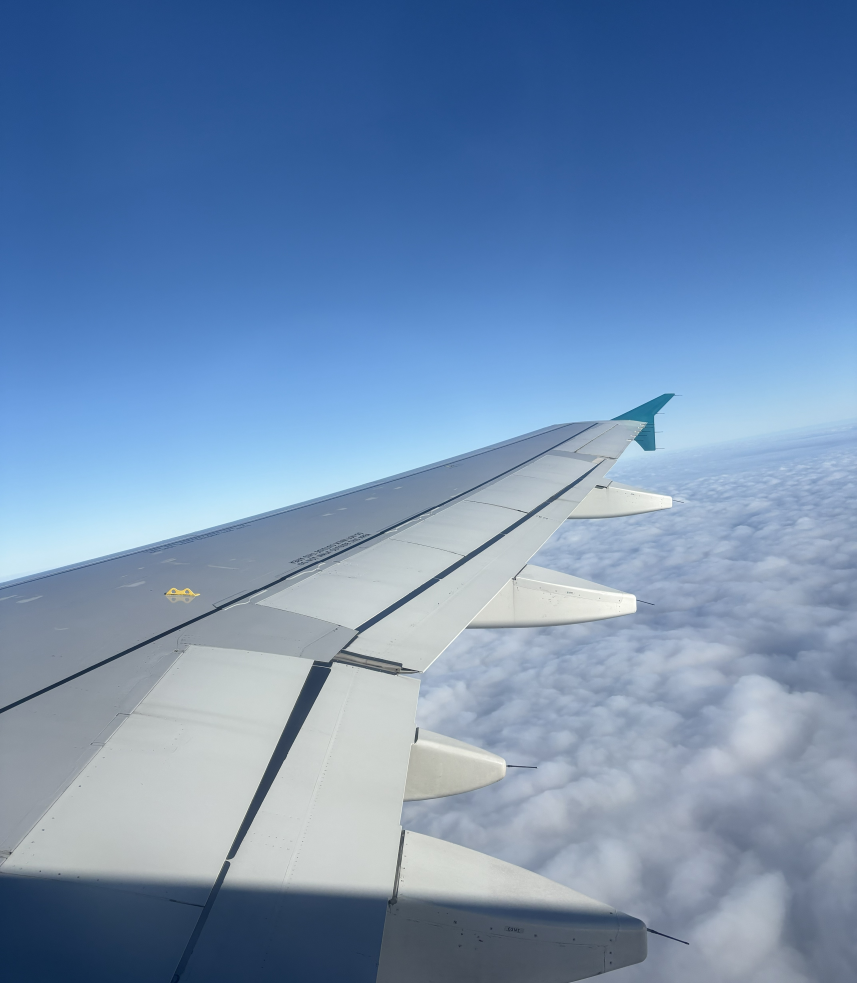
We landed just after 11:00 local time to something we had not really expected: sunshine. February in Dublin is known for grey skies and rain, so a bright, crisp winter's day was a good start. The group transferred by bus to the Belvedere Hotel, checken in, dropped luggage, and headed out to find lunch.
By early afternoon the group was back together for the first item on the agenda, the city walking tour.
The City Walk: Dublin on foot
The walking tour was led by Christophe. Each stop came with a great story and context. The route covered history, architecture, literature with a mix of well-known landmarks.
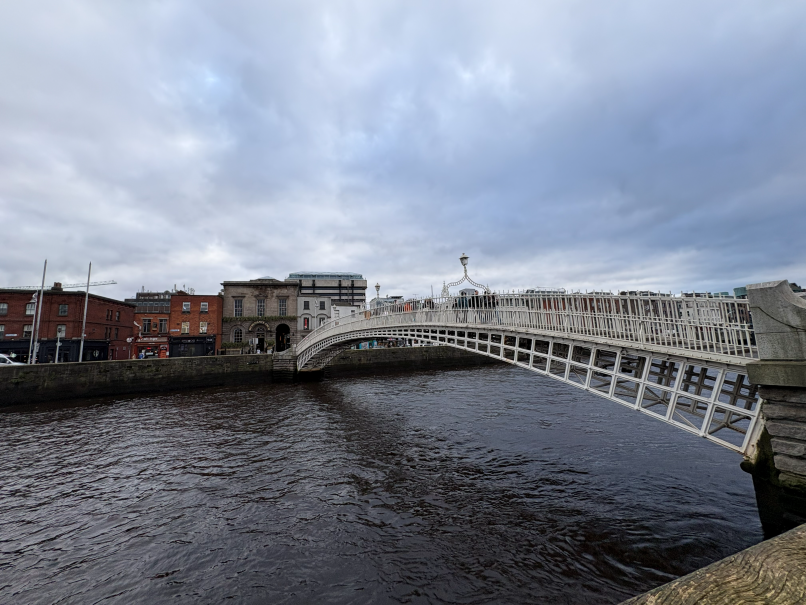
Stop 1: Ha'penny Bridge
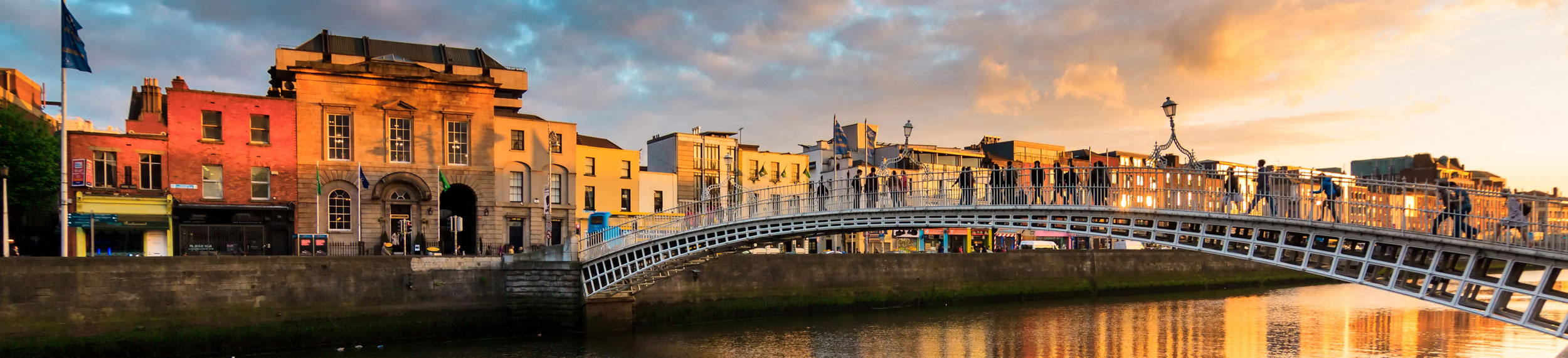
The walk started at Ha'penny Bridge, Dublin's oldest river crossing. Built in 1816, the cast-iron arch gets its name from the halfpenny toll that pedestrians once paid to cross the Liffey. It is still one of the most recognisable spots in the city.
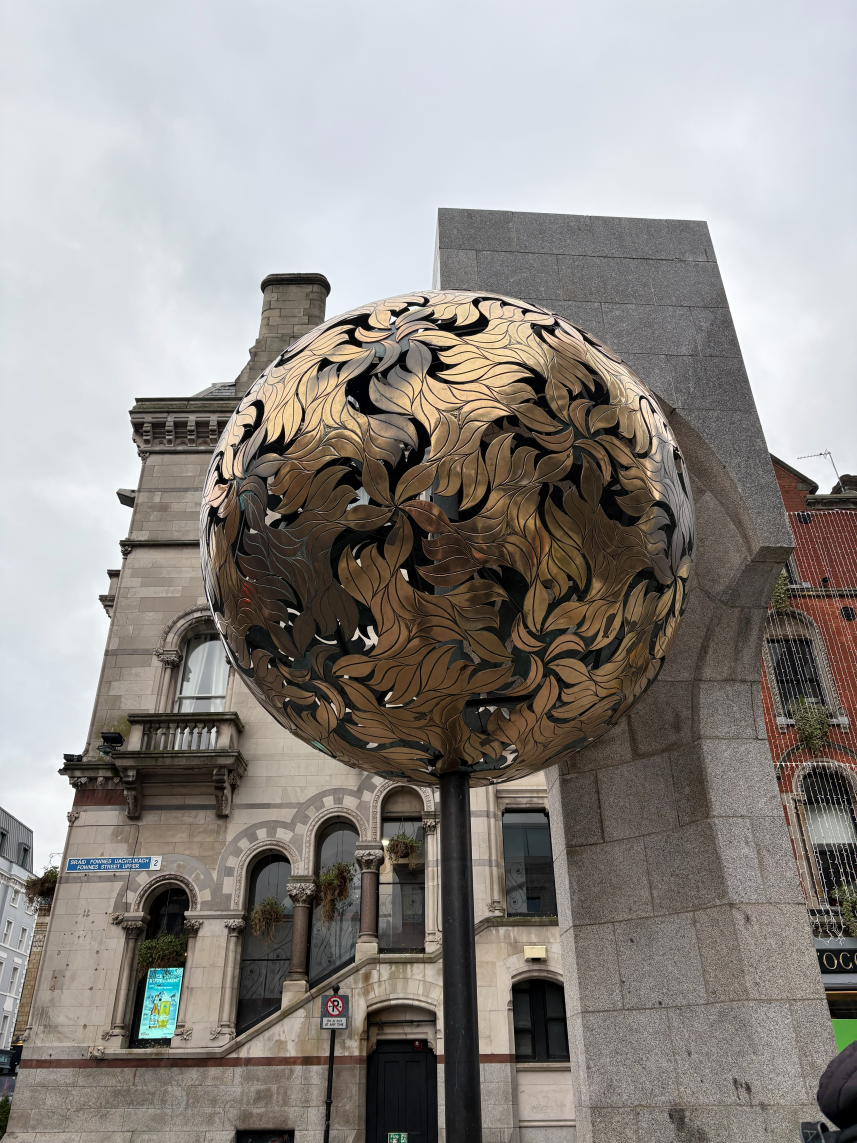
Stop 2: Crann an Óir (Tree of Gold)
The Crann an Óir, which translates from Irish as "Tree of Gold". Created by sculptor Eamonn O'Doherty, it is a large bronze sphere of cut-through leaf patterns, mounted on a single pole with a granite base.
The name references the Celtic Tree of Life, a symbol that appears throughout Irish mythology. The branches and leaves connect to the heavens, the trunk is rooted in the living world, and the roots reach down into the underworld. Together they represent the full cycle of life, death and rebirth.
Stop 3: Dublin Castle & The Dubh Linn Gardens
Dublin Castle was the centre of British rule in Ireland for over 700 years, from around 1204 until Irish independence in 1922.
Behind the castle are the Dubh Linn Gardens, which sit on the site of the original black pool that gave Dublin its name. In Irish, dubh linn means "black pool". The gardens have a Celtic knot pattern of stone eels running through the ground.
Christophe mentioned that Bram Stoker, author of Dracula, lived nearby the castle, and that the Gothic atmosphere of this part of Dublin is thought to have influenced the novel.
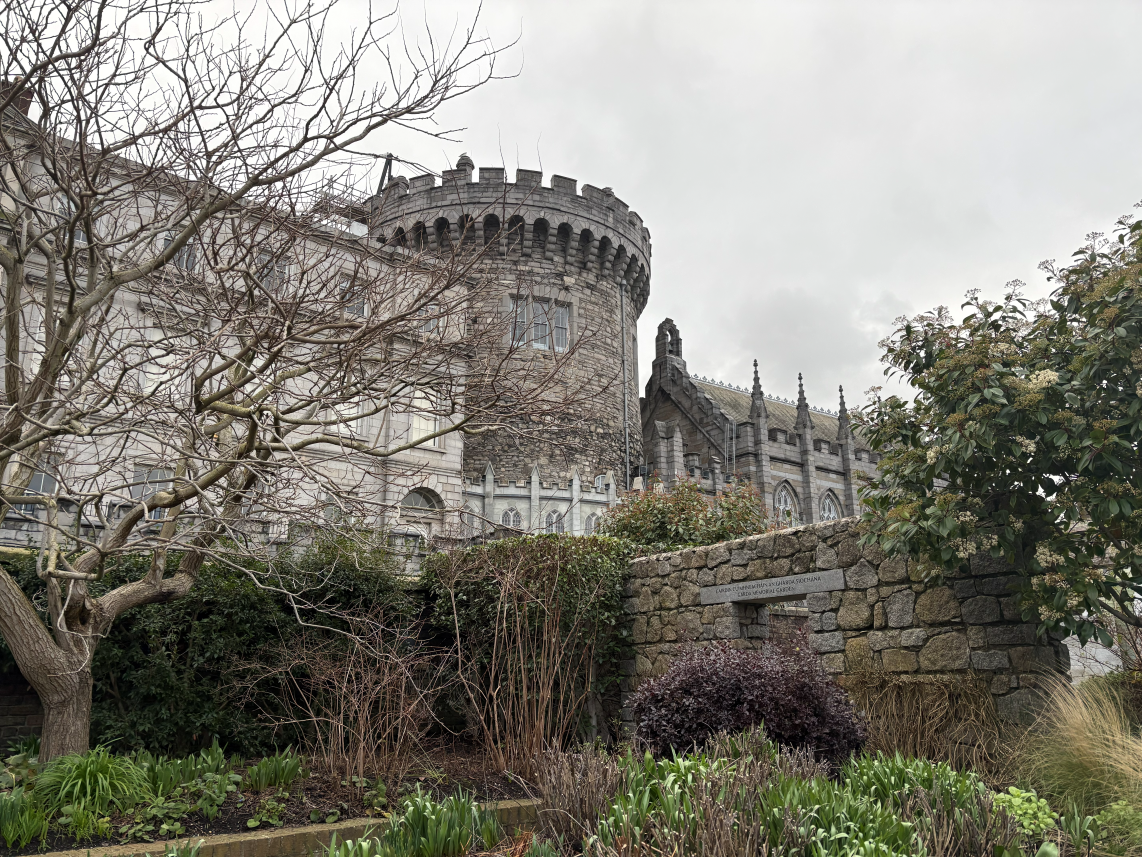
Dublin Castle. The Dubh Linn Gardens and Celtic eel stonework sit behind the main complex.
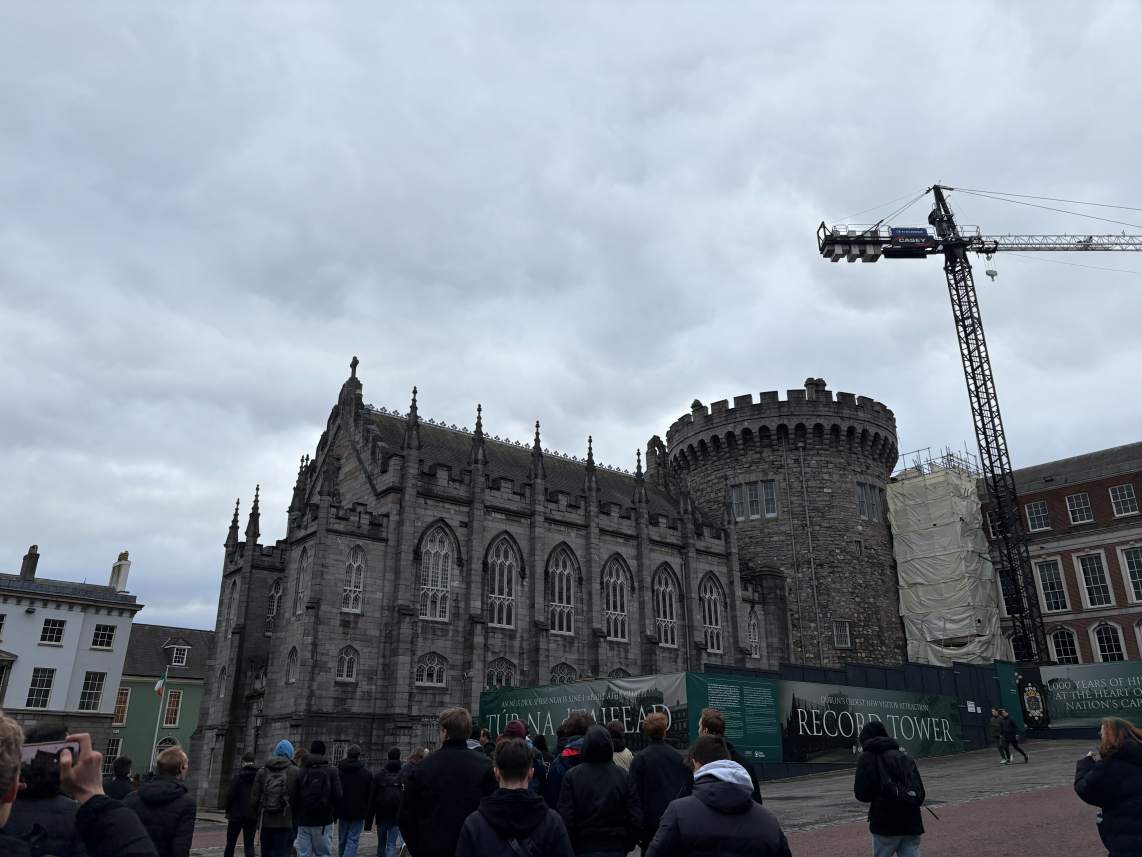
Dublin Castle. The Dubh Linn Gardens and Celtic eel stonework sit behind the main complex.
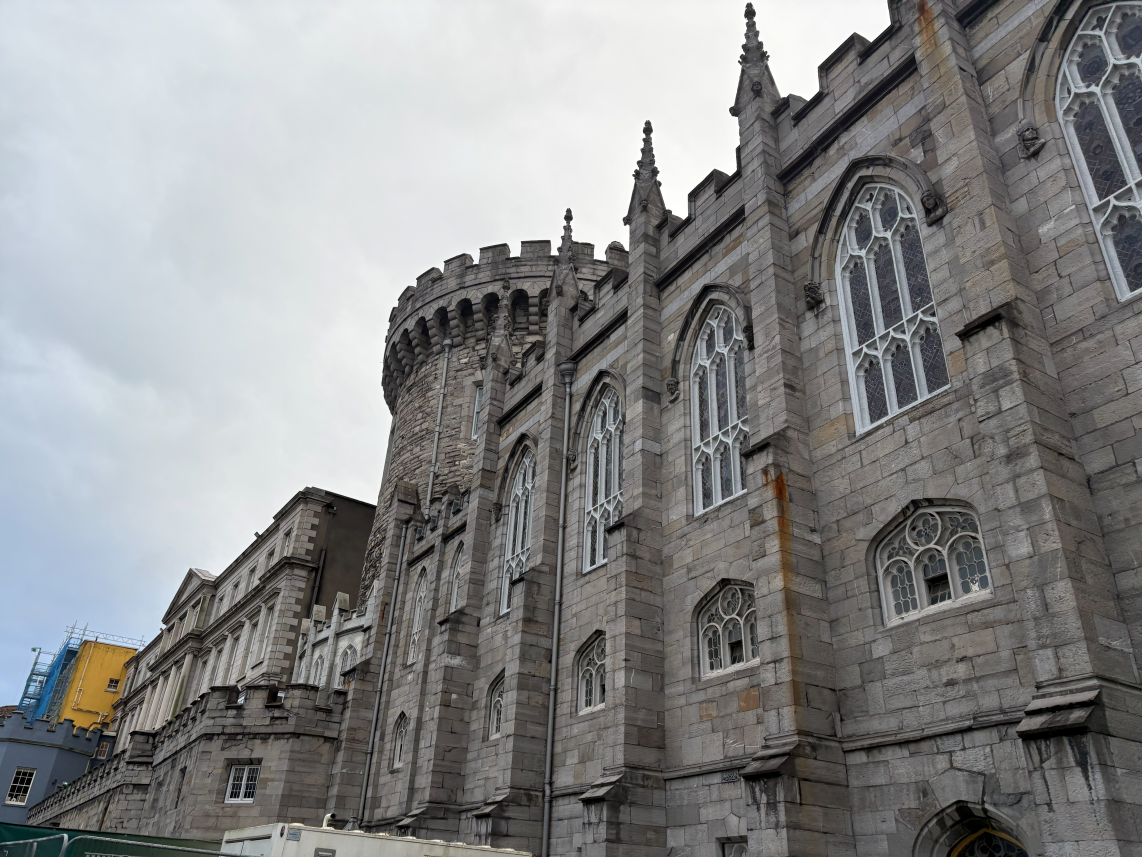
Dublin Castle. The Dubh Linn Gardens and Celtic eel stonework sit behind the main complex.
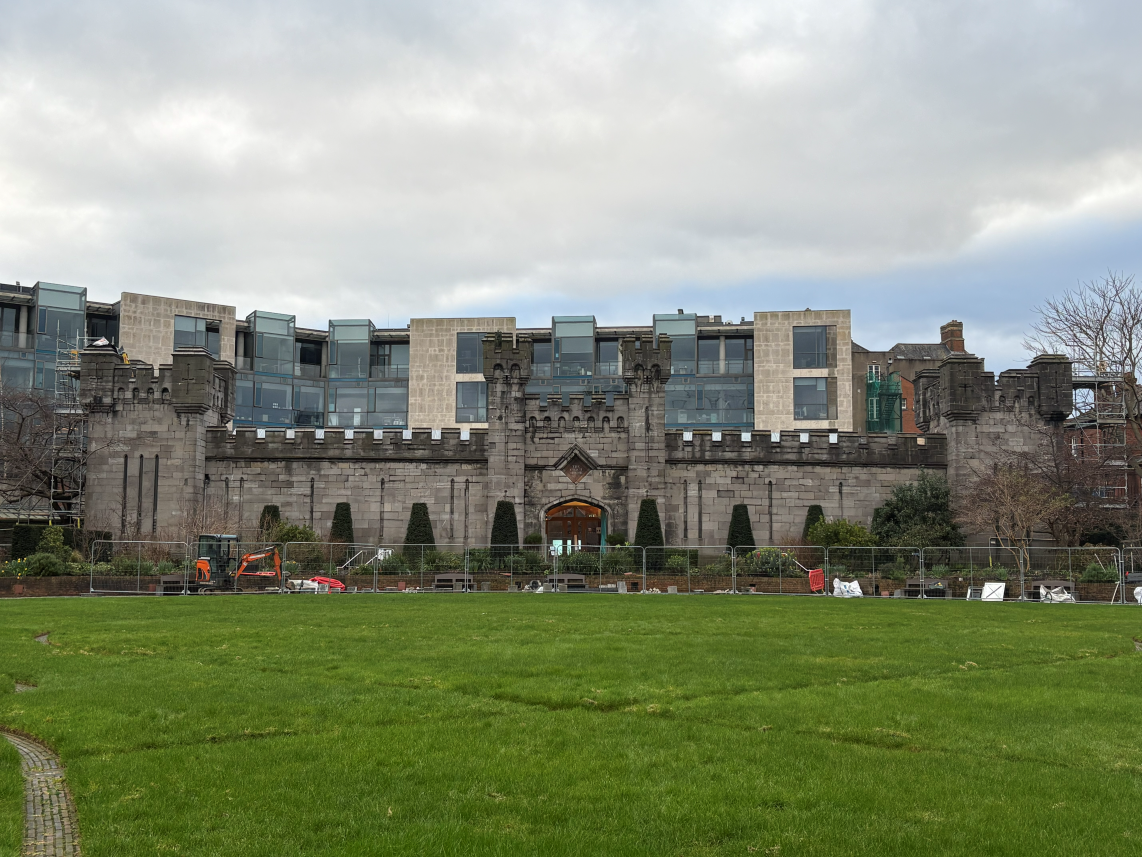
Dublin Castle. The Dubh Linn Gardens and Celtic eel stonework sit behind the main complex.
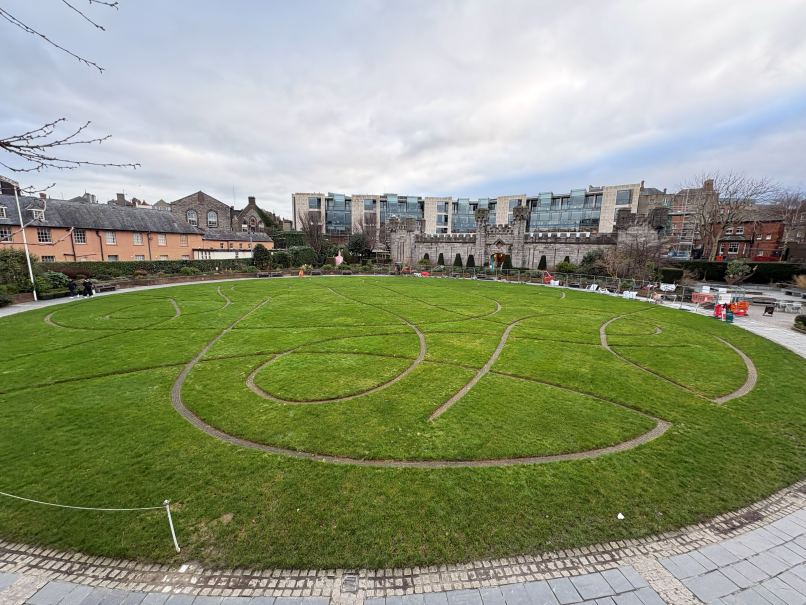
Dublin Castle. The Dubh Linn Gardens and Celtic eel stonework sit behind the main complex.
Stop 4: Christ Church Cathedral & The Homeless Jesus
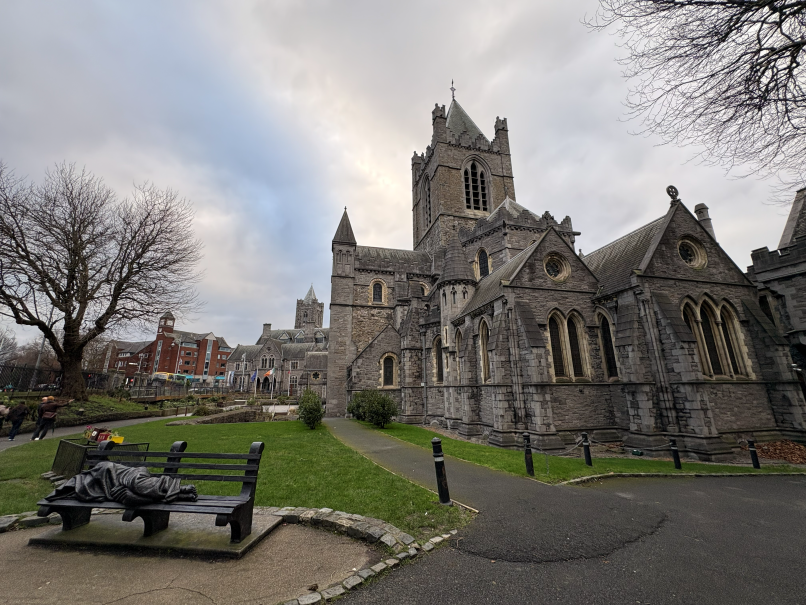
Christ Church Cathedral was founded in 1030 by Sitric Silkenbeard, the Viking King of Dublin, and has been standing for nearly a thousand years.
The 'Homeless Jesus' sculpture shows a cloaked figure lying under blankets on a park bench. There is no face visible. The only detail that identifies the figure as Jesus are the wounds on the feet. It was blessed by Pope Francis and installed there in May 2015, and versions of it now exist in over 100 cities.
We have one right here in Bruges as well, it sits quietly outside the Church of St. Mary Magdalene.
Stop 5: The Clarence Hotel & U2's famous rooftop
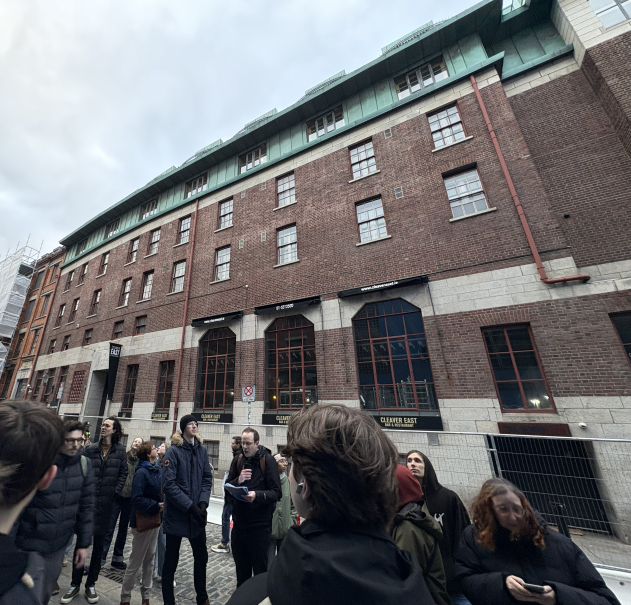
The Clarence Hotel dates back to 1852, but is best known today as the hotel that Bono and The Edge of U2 bought in 1992. A popular story claims the band were once refused a pint here as teenagers and vowed to buy it one day.
U2 later used the rooftop to perform Beautiful Day live after being unable to travel to London. Crowds of people gathered on the streets below and made traffic come to a stop.
Stop 6: Temple Bar & Molly Malone
Temple Bar is the area most visitors end up in at some point. The Temple Bar pub is hard to miss, especially while still fully decorated for Christmas.
The Molly Malone statue is a few minutes away. It depicts the fishwife from a famous Irish song, pushing her cart of cockles and mussels. Whether Molly was a real person or a fictional character has never been settled. Locals have given the statue a few nicknames over the years: The Tart with the Cart and The Dish with the Fish.
There is also a tradition of tourists rubbing the statue for good luck, which has left the bronze visibly worn in certain places.
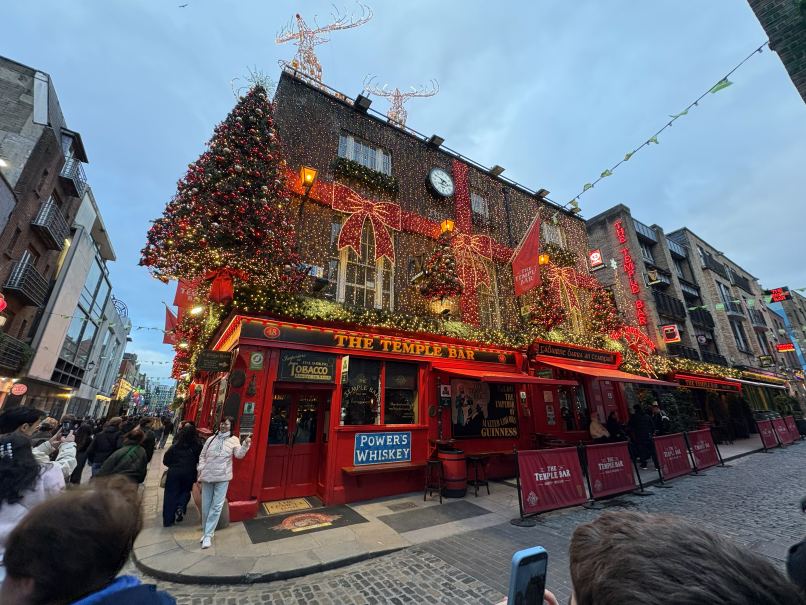
The Temple Bar pub in full Christmas decoration.
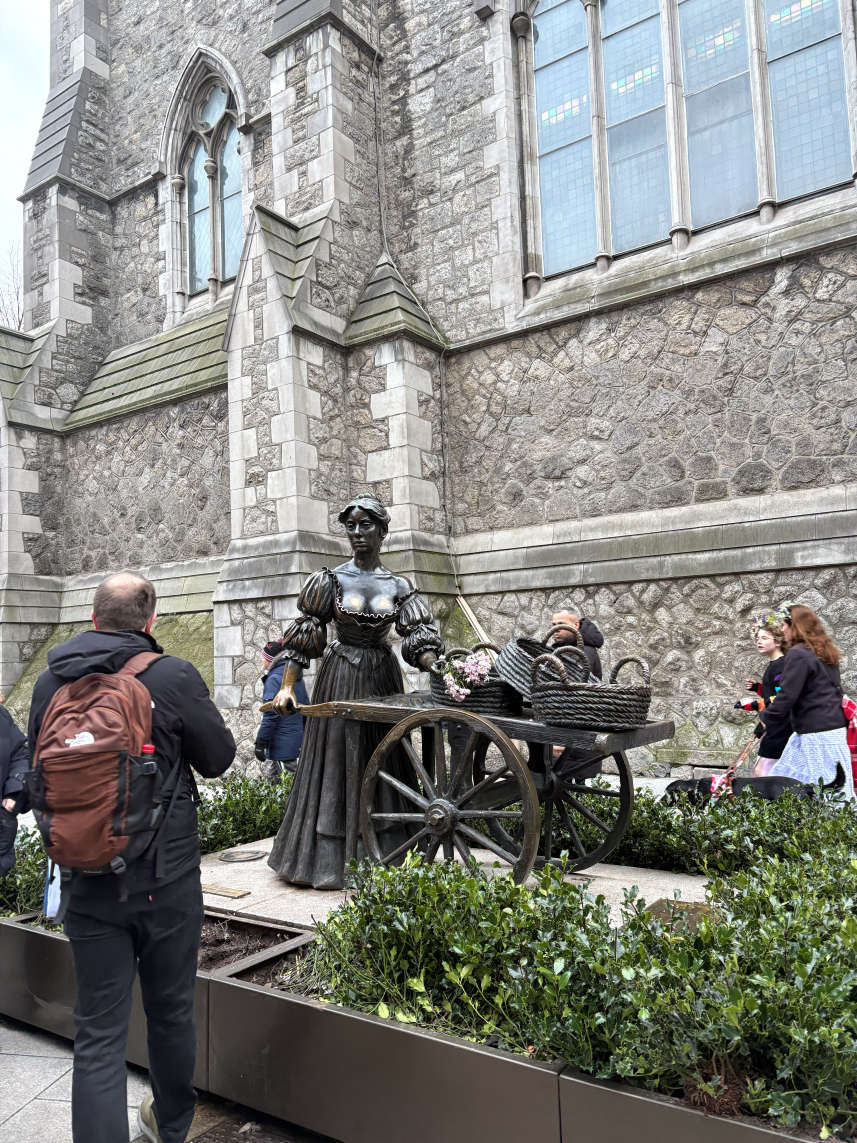
The Molly Malone statue, known as 'The Tart with the Cart'.
Trinity College Dublin
The last stop of the first day was Trinity College Dublin, Ireland's oldest university. It was founded in 1592 by Queen Elizabeth I.
The campus is a mix of medieval, Georgian and modern architecture, with the Old Library and the Book of Kells being the main attractions.
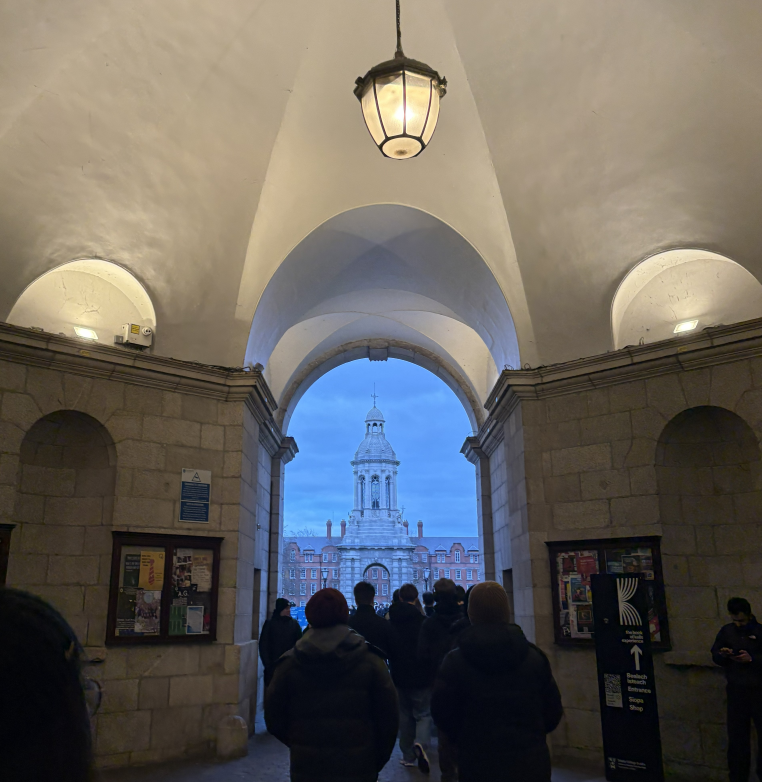
Trinity College Dublin.
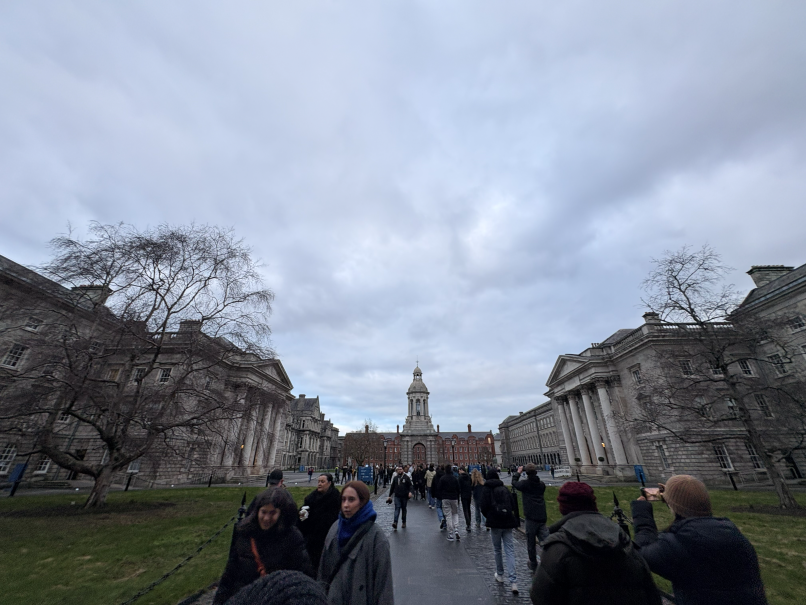
Trinity College Dublin. The historic campus and iconic architecture define the heart of the university.
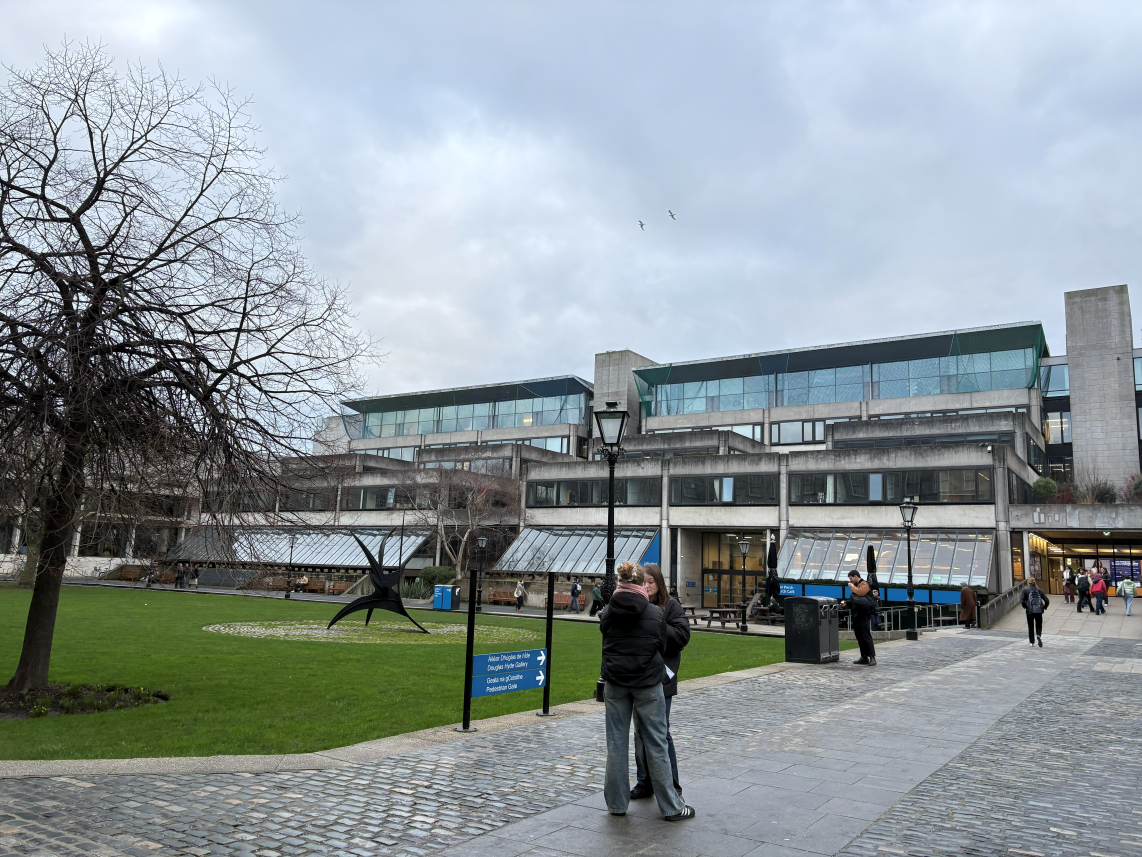
Trinity College Dublin. The historic campus and iconic architecture define the heart of the university.
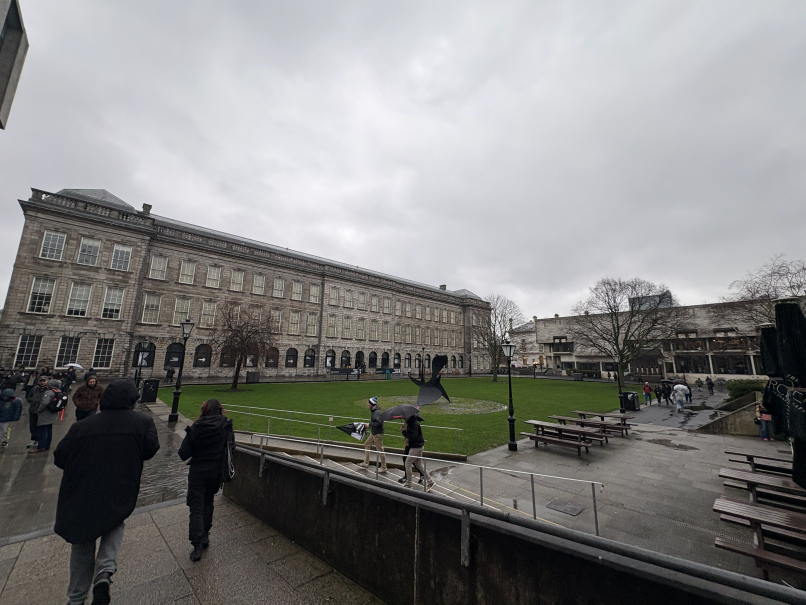
Trinity College Dublin. The historic campus and iconic architecture define the heart of the university.
Parliament Square & The Campanile
Through the front gate you come into Parliament Square, a wide cobblestoned courtyard with Georgian buildings on all sides and the Campanile clock tower at the centre, built in 1853. To the left is the Examination Hall where Trinity's scholarship exam is held each year. Around 70 students win it annually, covering tuition, accommodation and food for five years.
Trinity students avoid walking under the Campanile. The superstition is that if the bell rings while you are underneath it, you will fail your exams. The bell rings at random, sometimes going weeks without sounding.
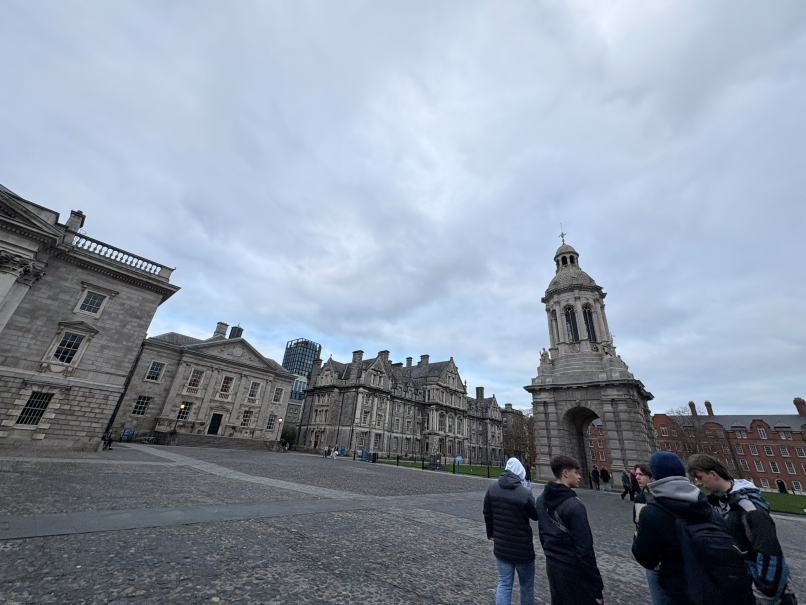
George Salmon & A History of Firsts
There is a statue near the Campanile of George Salmon, he was a mathematician who served as Provost of Trinity. He is also known for strongly opposing the admission of women to the college, reportedly saying they would only get in "over my dead body." When he died in 1904, he was buried under the entrance gate. The first women admitted to Trinity walked over his grave.
The Professor & the Drunk Students
Across the grass square, one evening three very drunk students stumbled back after a night out in Dublin. On the second floor lived one of Trinity’s most feared professors. The students thought it would be funny to throw stones at his window.
According to the tale, the professor lost his temper, threw open the window, grabbed a gun, and fired, hitting one of them in the shoulder.
The students ran off, but later came back armed and ready for revenge. When the professor appeared again they didn’t miss their chance. At the trial that followed, the students walked away without punishment, either due to their drunken state or their connections as sons of influential families.
The Book of Kells & The Old Library
The Book of Kells was created around 800 AD by Celtic monks. It is an illustrated version of the four Gospels, produced on vellum with an incredible level of detail. The colours remain vivid and have held up well across twelve centuries.
The fact that it survived at all is remarkable. Viking raids on monasteries were common during the 9th and 10th centuries, and the monks moved the manuscript repeatedly to protect it. It has remained intact for over 1,200 years.
The Old Library is a long vaulted hall lined floor to ceiling with around 200,000 books, with marble busts of scholars lined down its centre. It is currently undergoing a major conservation project, with many of the books temporarily removed as Trinity works to preserve the collection for future generations.
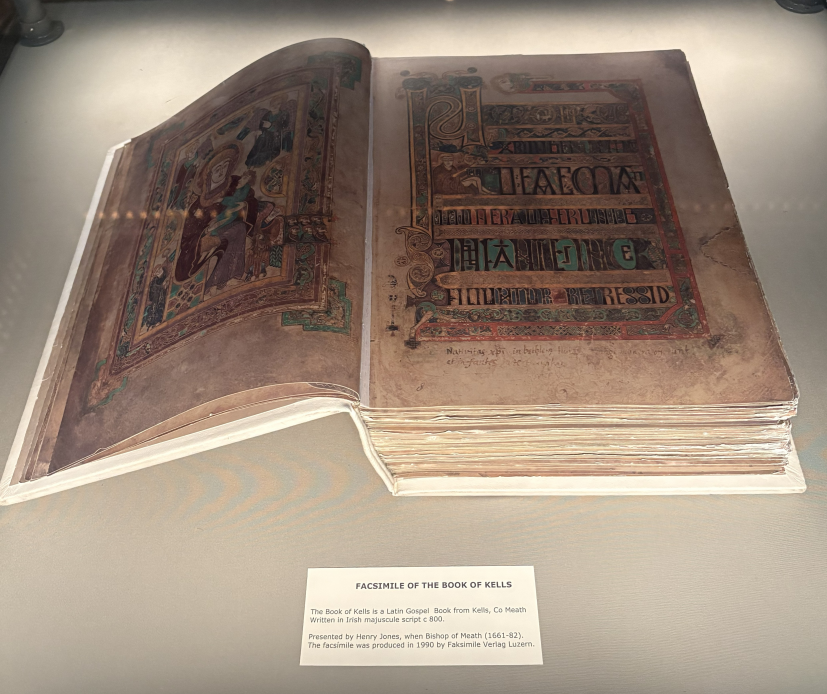
The Book of Kells, created c.800 AD and surviving over 1,200 years including Viking raids.
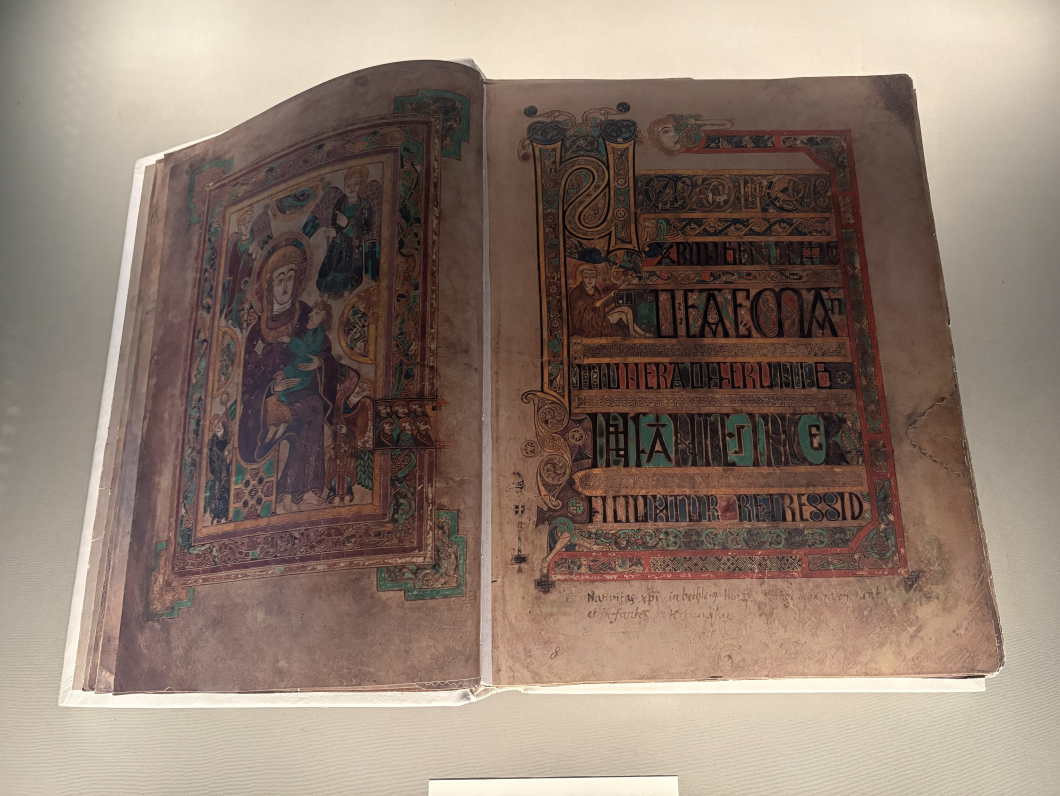
The Book of Kells, created c.800 AD and surviving over 1,200 years including Viking raids.
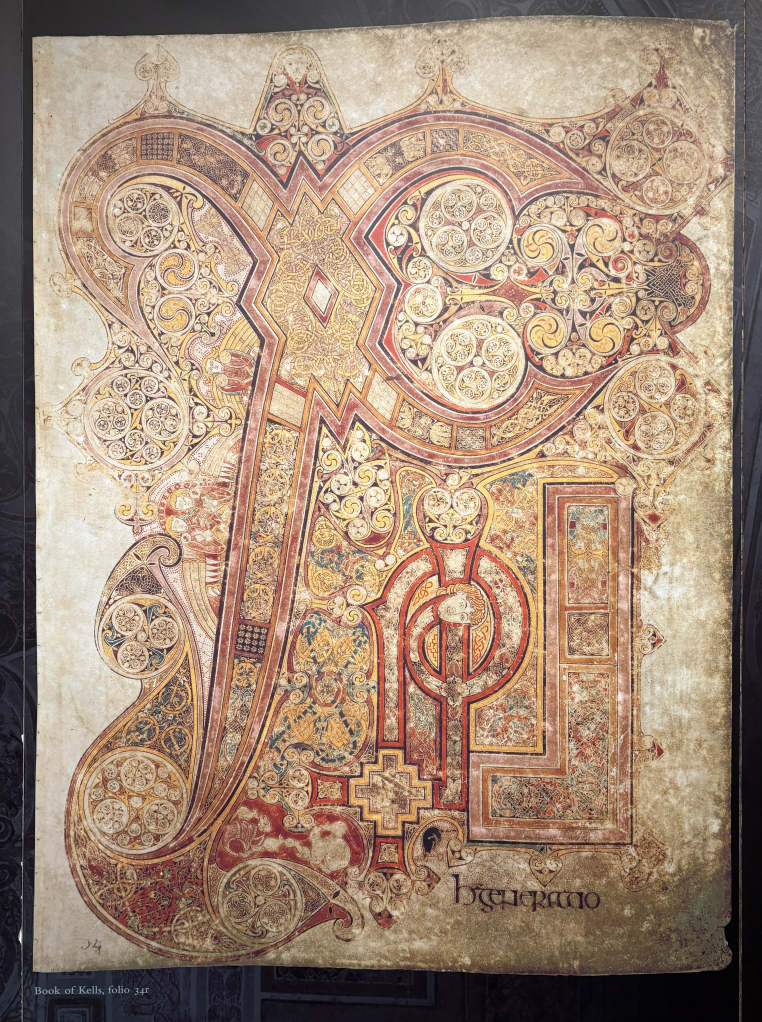
The Book of Kells, created c.800 AD and surviving over 1,200 years including Viking raids.
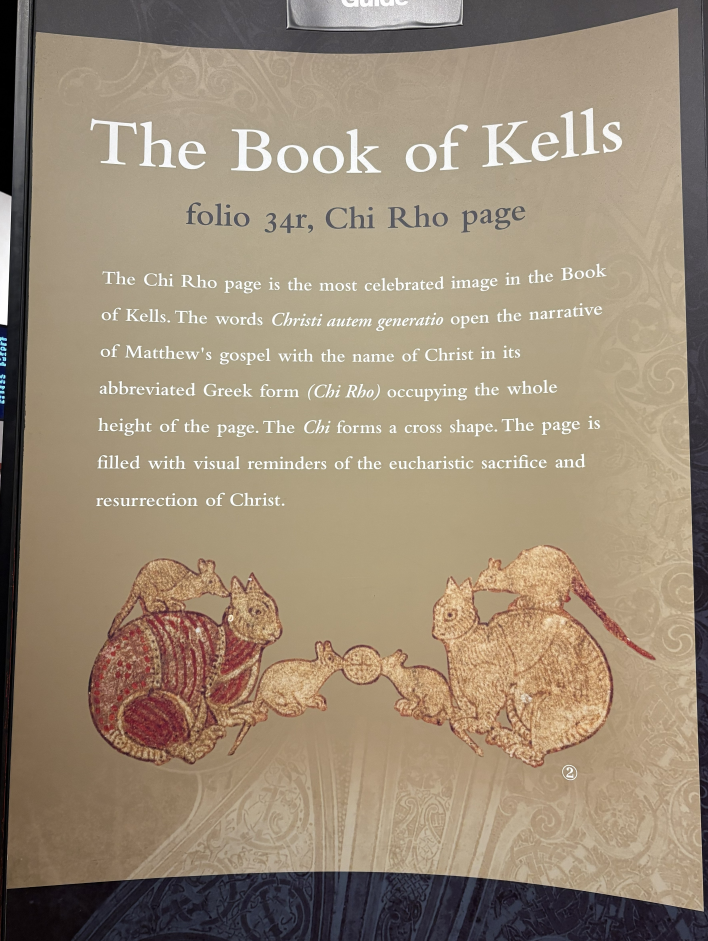
The Book of Kells, created c.800 AD and surviving over 1,200 years including Viking raids.
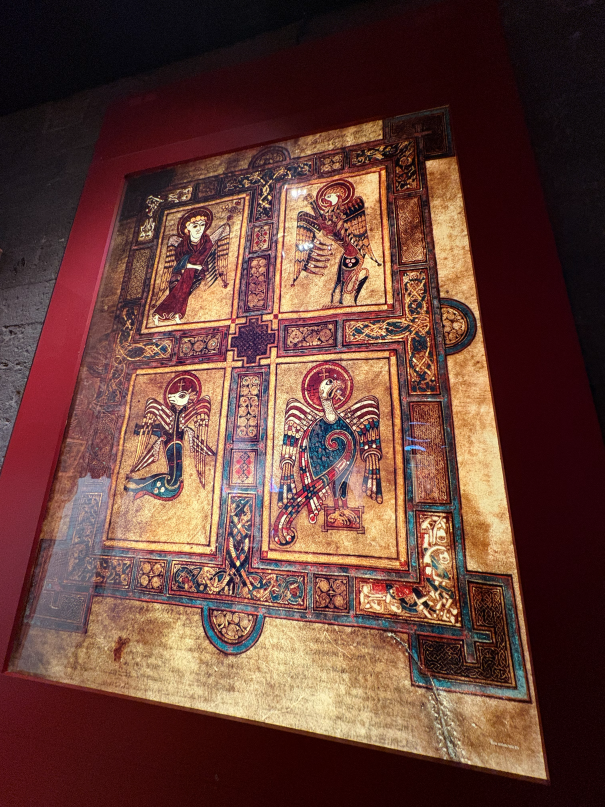
The Book of Kells, created c.800 AD and surviving over 1,200 years including Viking raids.
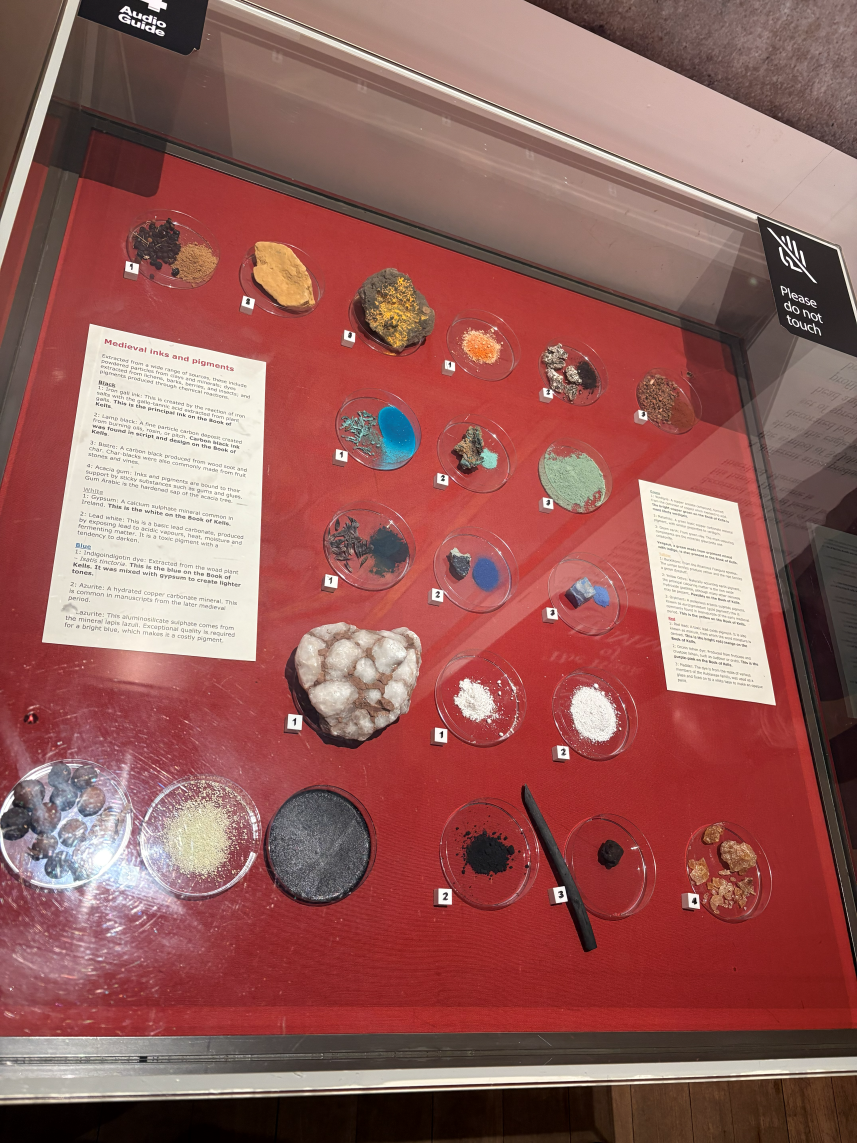
The Book of Kells, created c.800 AD and surviving over 1,200 years including Viking raids.
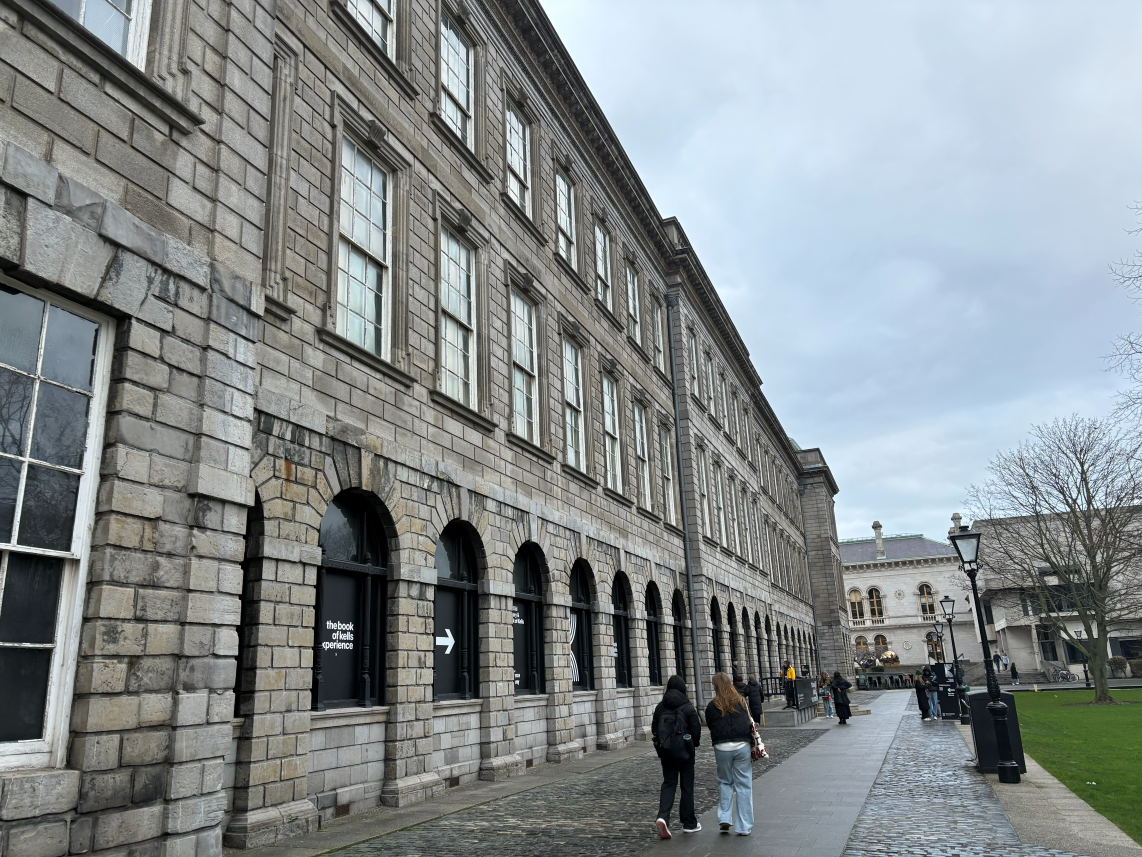
The Old Library at Trinity College Dublin, home to the Book of Kells and one of the most impressive library spaces in the world.
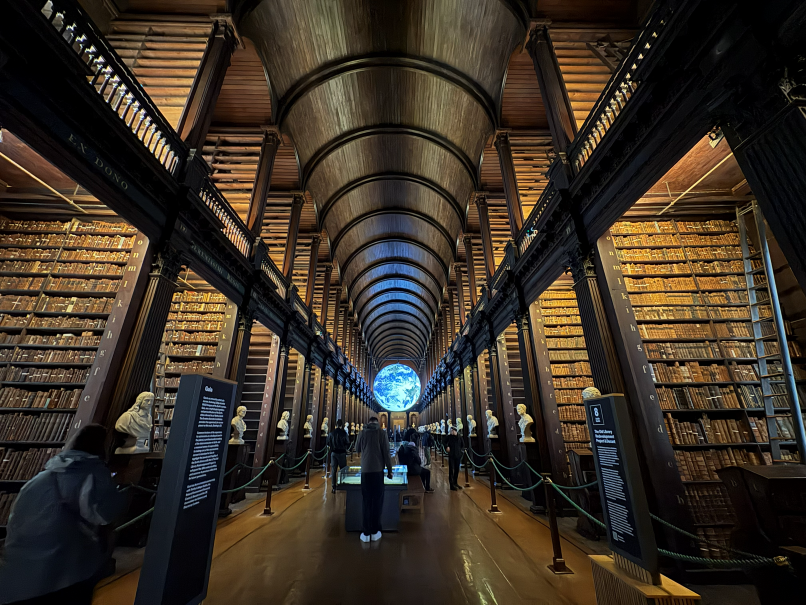
The Old Library at Trinity College Dublin, home to the Book of Kells and one of the most impressive library spaces in the world.
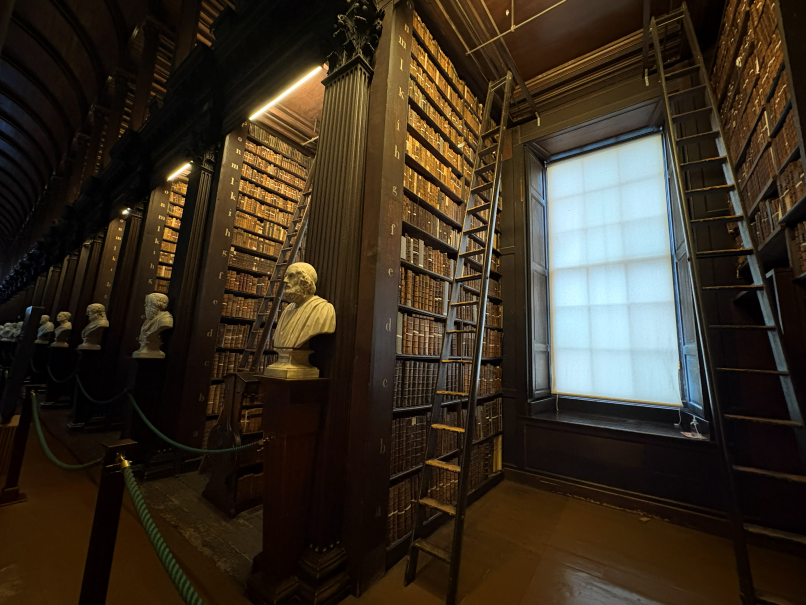
The Old Library at Trinity College Dublin, home to the Book of Kells and one of the most impressive library spaces in the world.
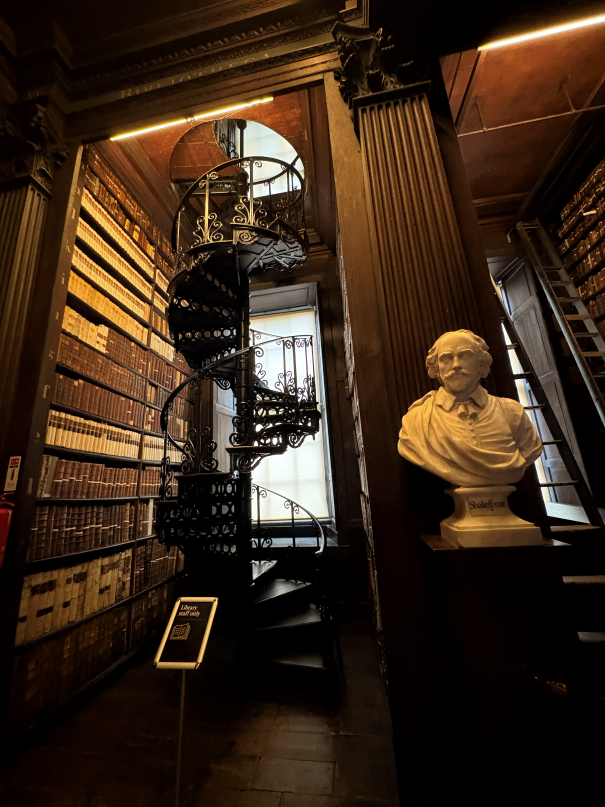
The Old Library at Trinity College Dublin, home to the Book of Kells and one of the most impressive library spaces in the world.
The first night
By the time we left Trinity it was early evening and the group split off in different directions. Some headed back to the hotel, others went in search of food, and a few of us wandered on, not quite ready to call it a day just yet. The success of the first day set the tone for everything that followed.
Day Two
Tuesday, 3 February 2026 • LinkedIn & Howth cliffs hike
On Tuesday we were supposed to go to Microsoft in the morning and to LinkedIn in the afternoon. Unfortunately just before the start of the trip, Microsoft cancelled our appointment. Our teachers were able to negotiate with LinkedIn, allowing us to go in the morning instead. This meant we were free in the afternoon. The teachers had arranged it so we could go for a hike on the Howth cliffs in Howth. This wasn’t mandatory, but I did go with them.
Our visit to LinkedIn started with a presentation. They taught us the importance of building a social network and showed us how LinkedIn could help with that. We were shown exactly how LinkedIn worked and how employers used it. By the end of it we all knew how to make our LinkedIn account as attractive as possible.

After the presentation we had some time to drink some coffee or flavoured water, eat some pastries or fruit and talk to the LinkedIn employees. They also gave us a ballpoint pen and a pack of stickers. After this brief intermission, we were split up into different groups and received a tour of the office.
The LinkedIn office itself was really big. It was designed in an almost whimsical way. In the entrance hall there was this sort of staired seats area, reminiscent of a cinema, where they could hold presentation or watch movies. This also functioned as a stairway to the first floor.
On the first floor we saw something that was present on every other floor as well, a snack table. All employees could go over there and take whatever they wanted. The stairs to every subsequent floor after that were this sort of winding staircase in the middle of the space, it reminded me of the moving staircases in Harry Potter. They also showed us some of the common areas where the employees could hang out and the cafeteria.
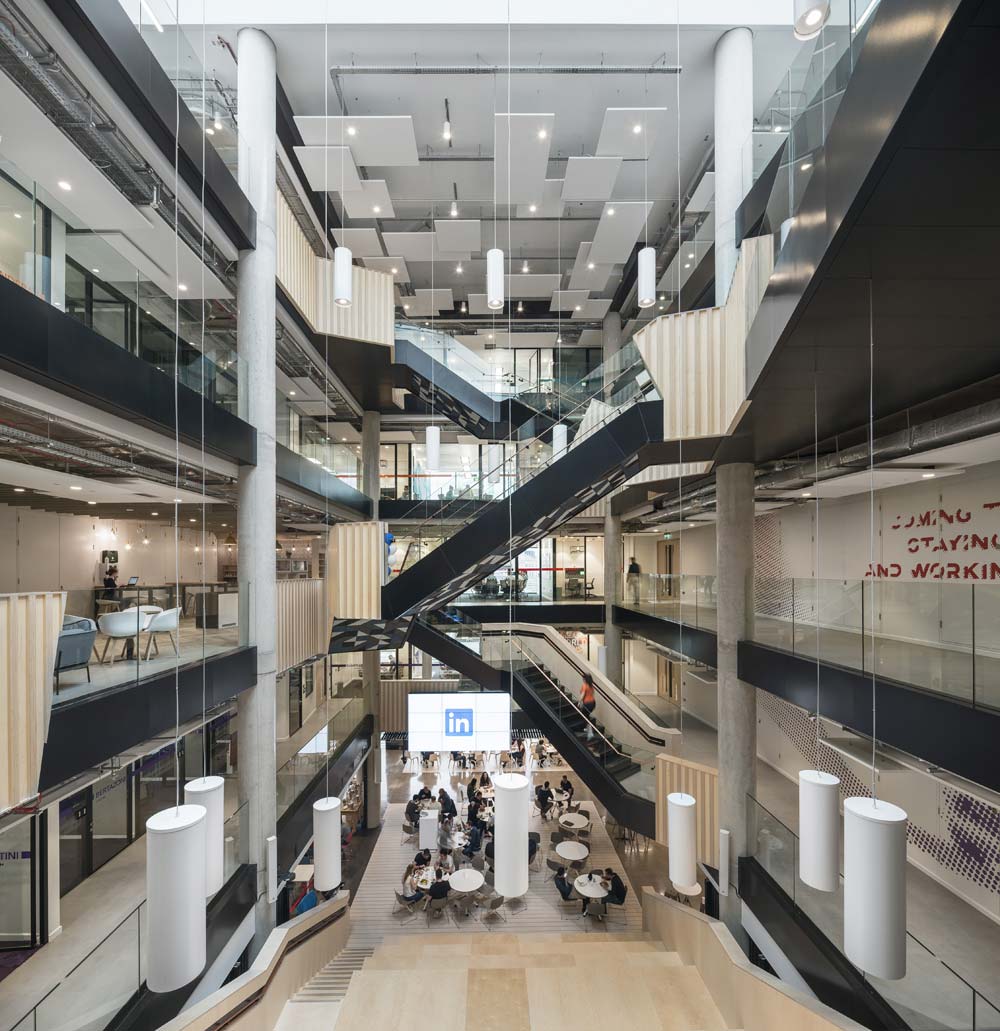
We ended our visit by taking pictures with the LinkedIn sign located in the entrance hall.
Howth
In the afternoon, we could do what we wanted, but I choose to join the teachers in their trip to the Howth cliffs.
We met up at the station to take the train towards our 7 kilometre long walk.
The walk itself was gruelling. For starters, it had been raining all day and the wind refused to let up. A lot of the trial we had to walk was uphill. The quality of the path was also impacted by the weather as most of them were dirt paths and so turned to mud.
Despite everything, it was still a really fun hike. The Howth cliffs are breathtakingly beautiful. Their location next to the see made it so, whenever we stopped to take a break, you could watch the waves of the unruly Irish Sea. I could have stared at those for hours.
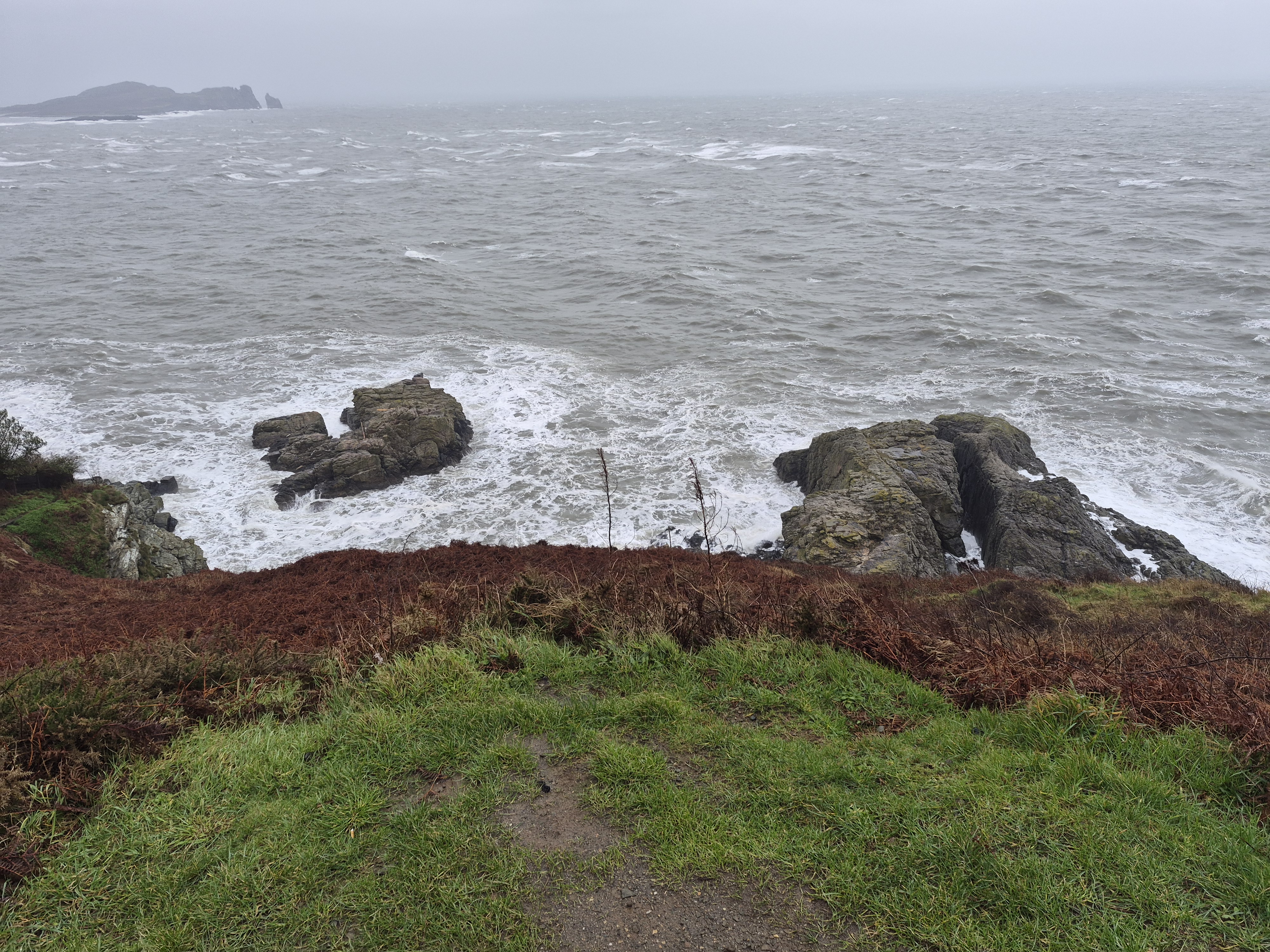
Much to my dismay, the teachers wouldn’t allow that and we had to keep going. Once we got back to the station we heard repeated messages that certain stations on our way home had flooded due to the rain. This stranded us in Howth for an extra hour on the cold station. Eventually a train did come and all of us safely made it back to Dublin.
Day Three
Wednesday, 4 February 2026 • IBM & Belgian Embassy
On Wednesday we had two company visits planned. In the morning we travelled by bus to the Irish offices of IBM. In the evening we took the train to the Belgian Embassy in Dublin, where we received a presentation about Kyndryl, a company that used to be part of IBM.
IBM
When we arrived at IBM, we were welcomed by several employees who gave presentations about the company and the work they do. They first explained the history of IBM and how the company evolved over the years from hardware and computers to modern IT solutions and cloud services.
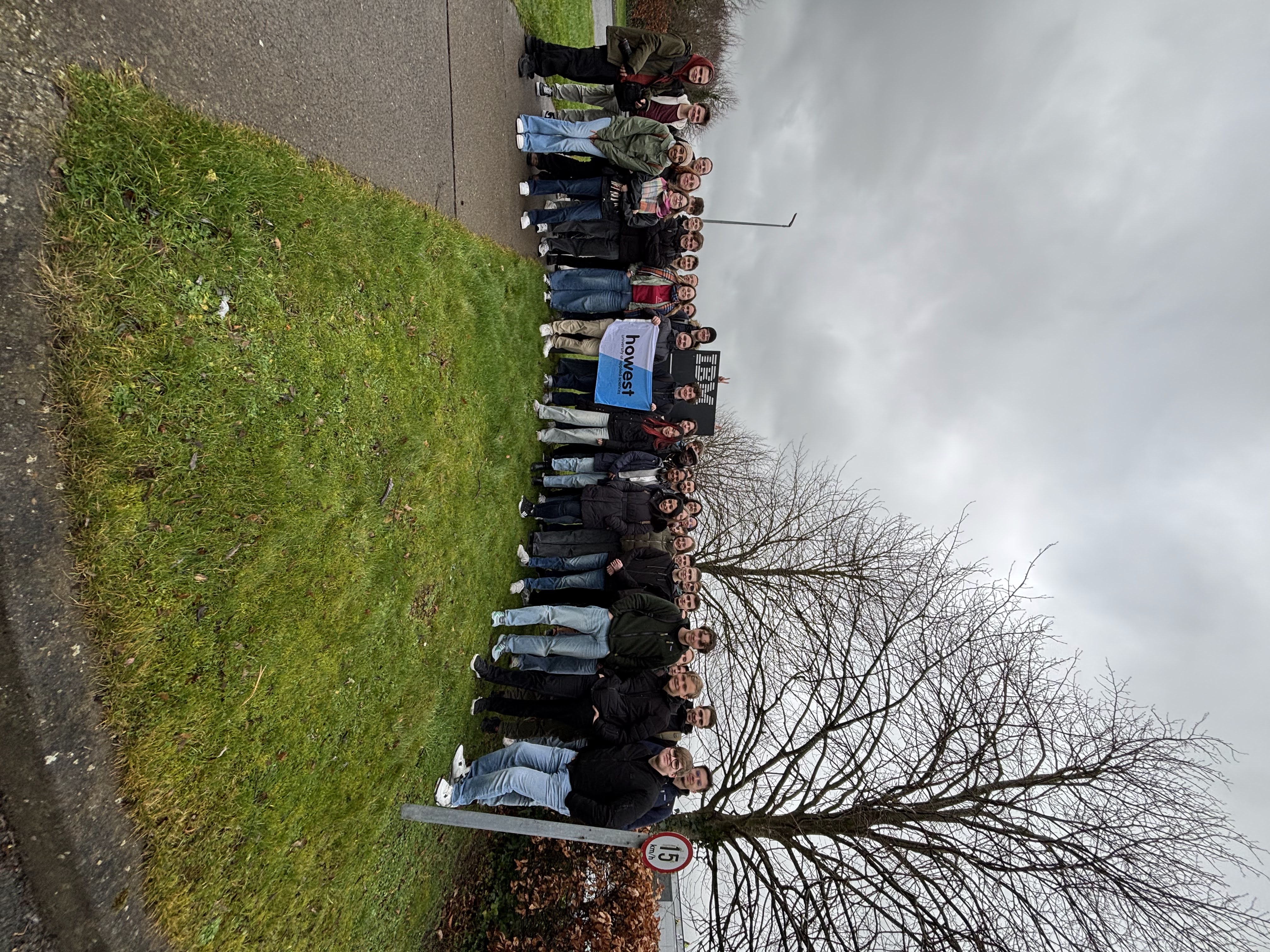
The employees also talked about the kind of projects IBM still works on today. A big part of their work focuses on building and managing servers, IT infrastructure and systems for large companies. They explained how important reliable systems are for businesses such as banks, hospitals and international companies.
Another interesting topic was cybersecurity and cloud computing. They showed us how companies store and protect large amounts of data and how IBM helps organisations keep their systems running securely at all times.
Besides the technical side, it was also interesting to hear about the daily life of the employees. Some of them explained what studies they had followed and what kind of projects they worked on. They also talked about teamwork and communication inside such a large company.
Overall the visit gave us a much clearer idea of how large IT companies operate behind the scenes and how important technology infrastructure is in everyday life.
Belgian Embassy & Kyndryl
In the evening we took the train to the Belgian Embassy in Dublin. There we attended another presentation, this time about Kyndryl.
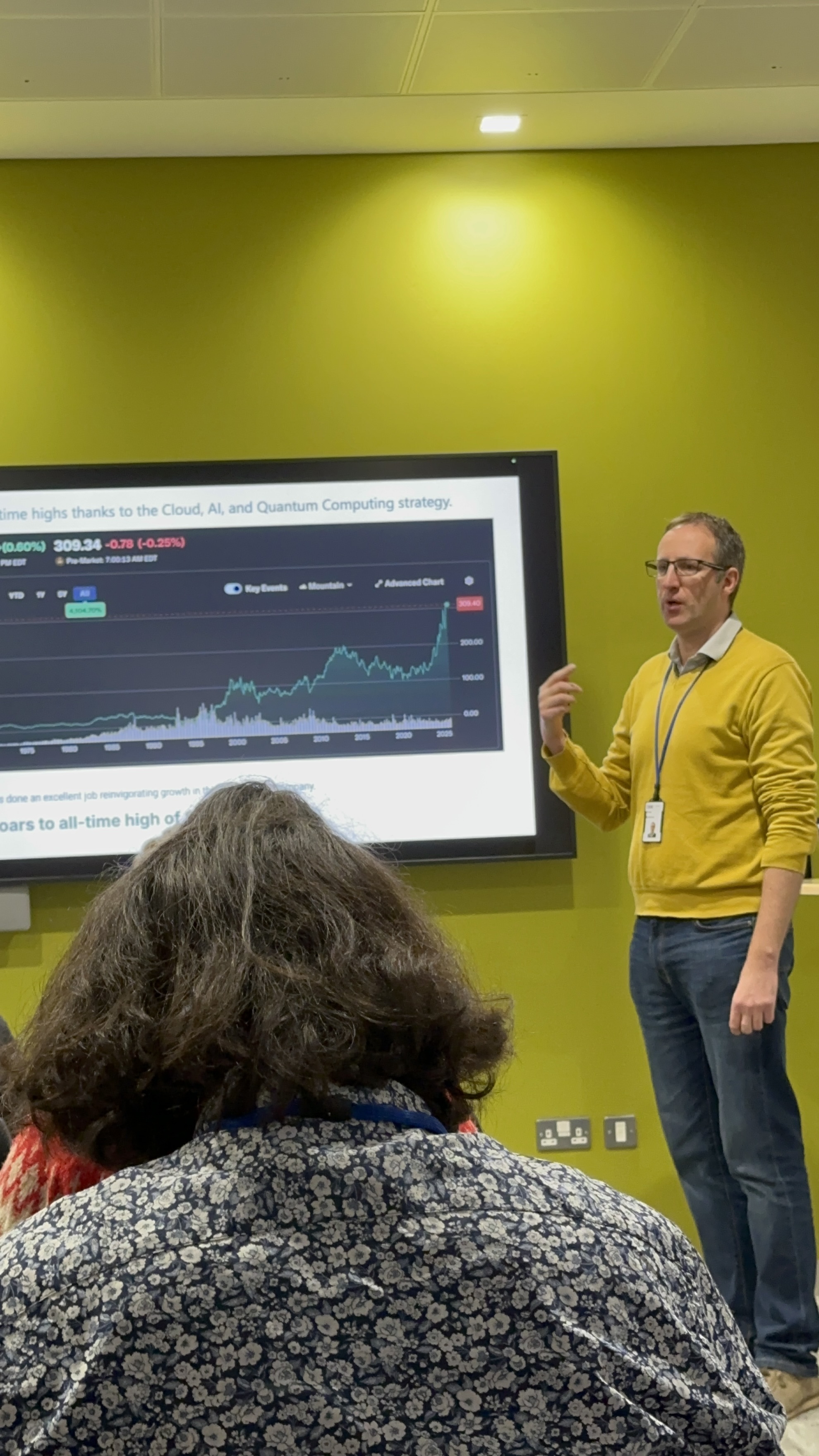
Kyndryl used to be part of IBM, but became its own company focused on IT infrastructure services. The presenters explained that Kyndryl mainly helps companies manage and modernise important computer systems.
During the presentation we saw a PowerPoint about the different technologies Kyndryl works with. One of the things the company is known for is supporting banking infrastructure and ATM systems. They help businesses keep their systems secure and operational at all times.
The presentation was very informative and gave us another perspective on how much work goes on behind the technology people use every day without even noticing it.
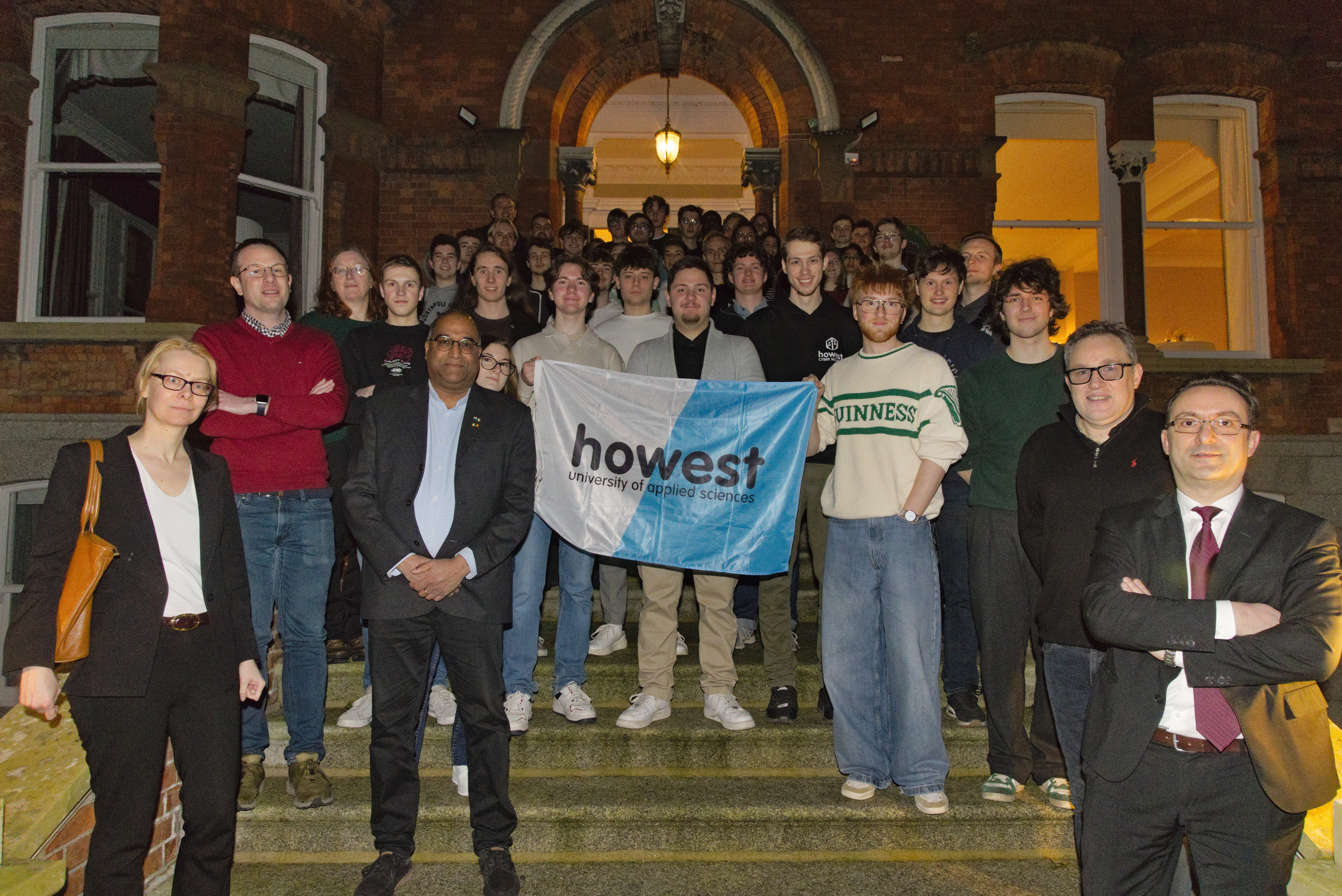
Both company visits were very educational and gave us a better understanding of the IT sector. It was interesting to hear directly from people working in the industry and learn more about the systems that keep modern businesses running.
Day Four
Thursday, 5 February 2026 • Google Headquarters & Guinness Storehouse
On the fourth day, we planned to visit Google. In the morning, we were given the option of either taking the tram or going on foot. I chose to go by tram as I was quite tired from the day before.
Arriving at Google
When we arrived at Google, we had to wait for the other group (that was on foot). Once the other group arrived, we were allowed to go inside and receive our badge. Because our group was so big we split into groups of 8.
The Merch Store & Workspace
All groups were first brought to the Google merch store. Here they had lots of Google branded items like T-shirts, hoodies, stickers and more. After the visit to the store the tour continued. We were shown some of the places the employees could work. There were offices scattered around the building where you could sit in peace and quiet.
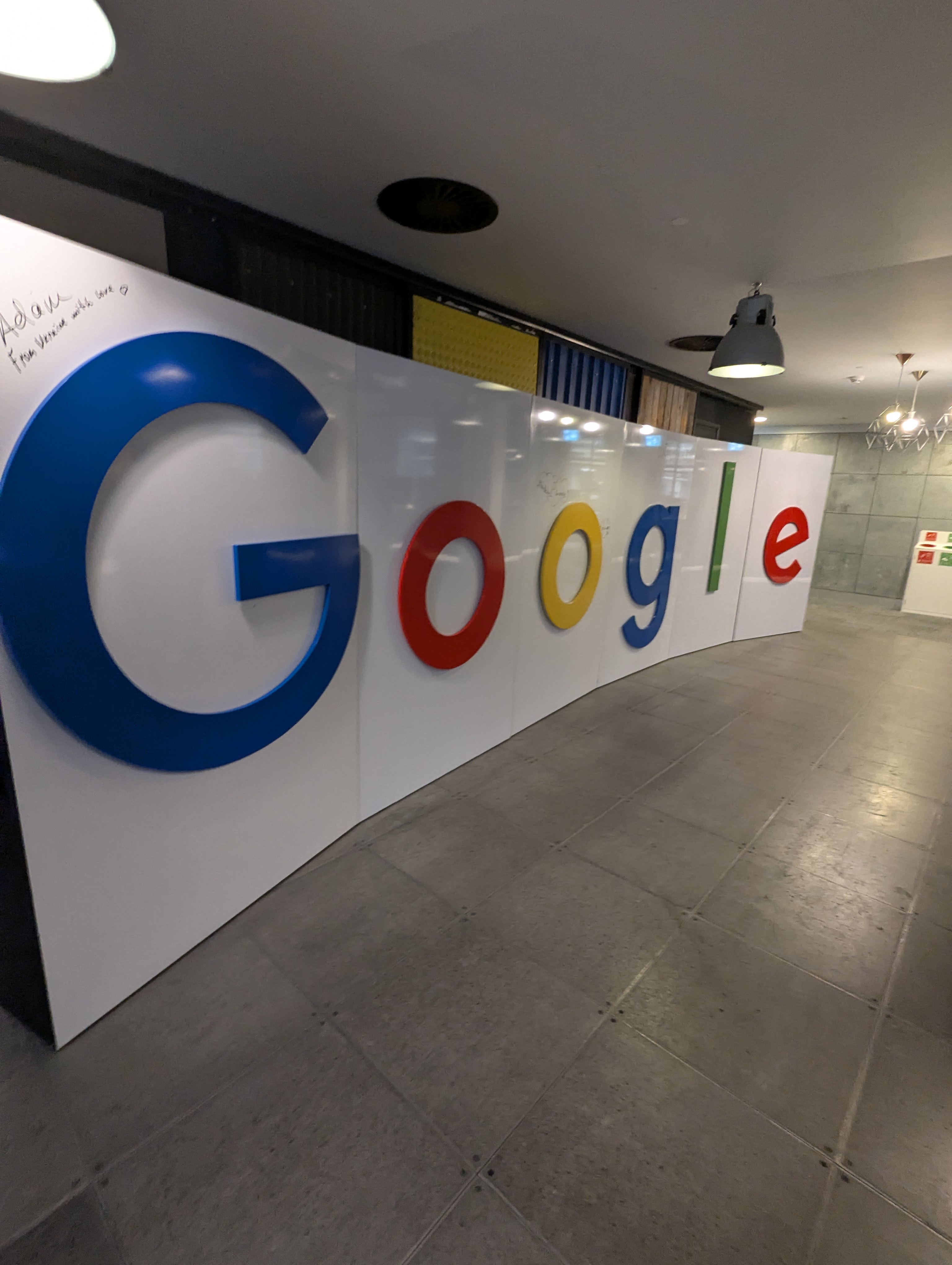
Browsing through the Google branded items at the merch store.
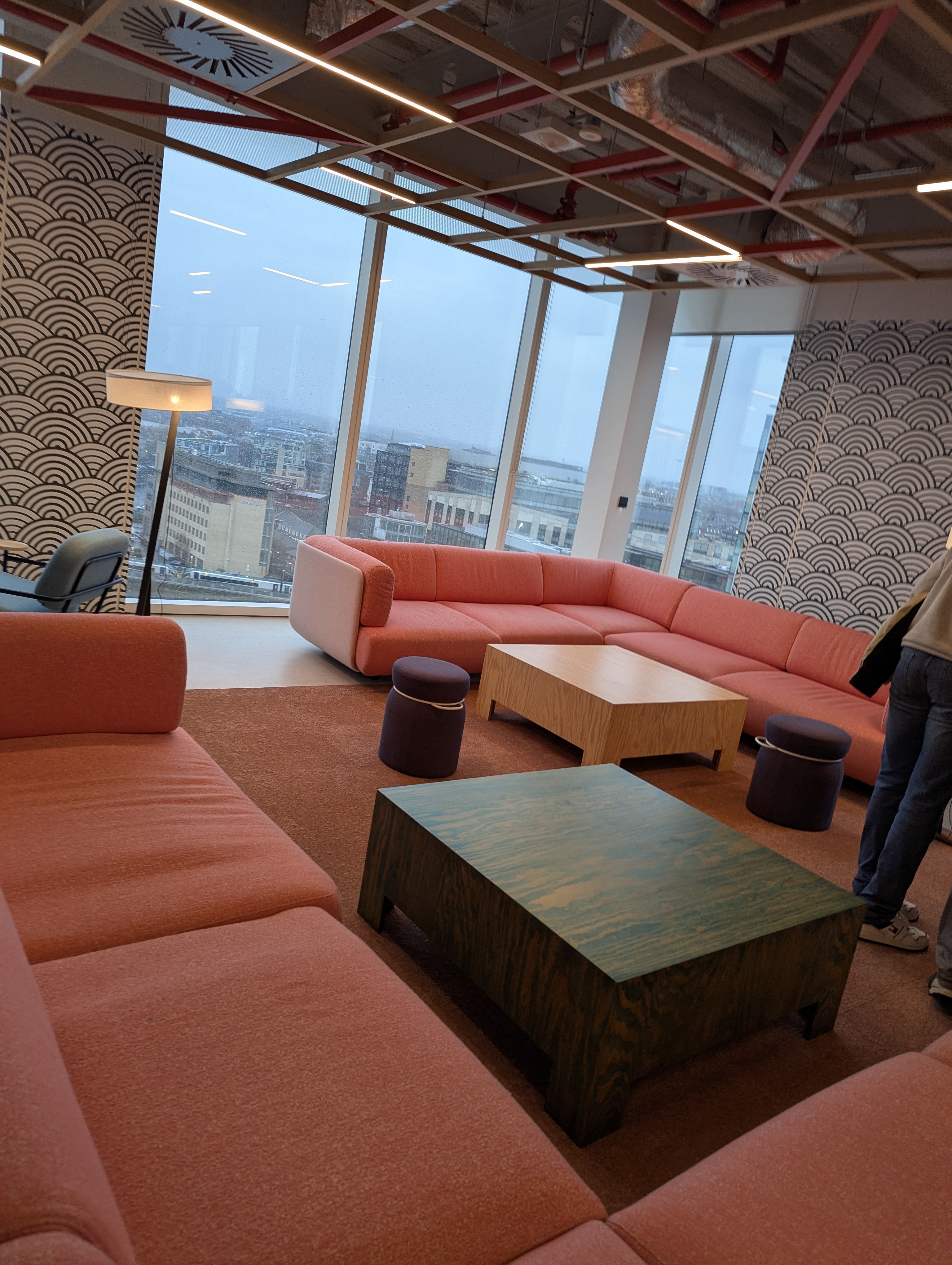
One of the quiet office spaces scattered around the building.
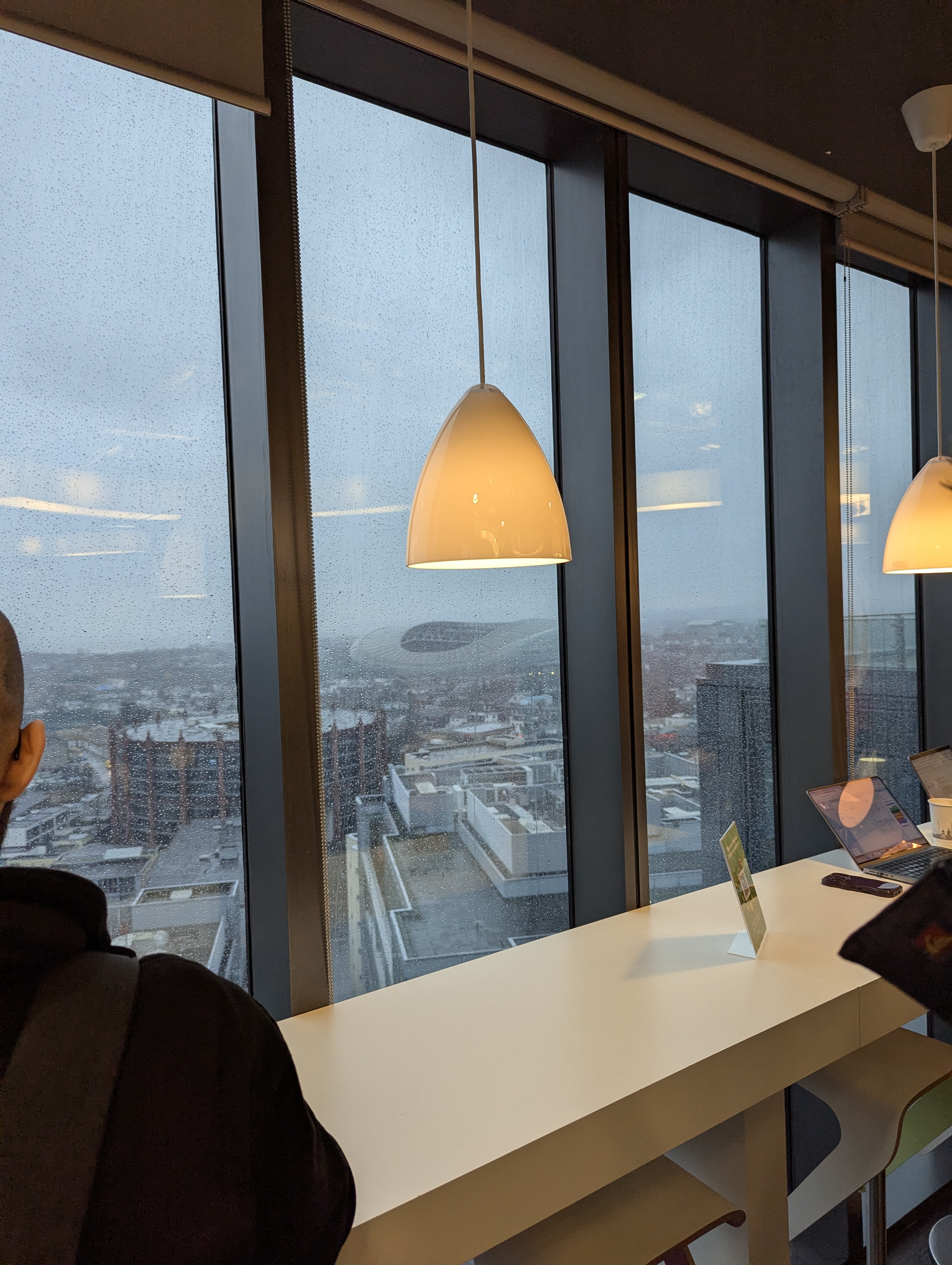
Exploring the unique workspaces inside the Google building.
Relaxation & Leisure
But relaxation is also important. That is why there were plenty of ways to take your mind off work. For example, there was a pool, a cinema, minigolf and pool tables. There also were living room-like places in the building. Where you have an abundance of consoles like the Wii, PS3, PS4 and many others. It looked to me like most of the games were meant to be played together with your coworkers. You had games like Guitar Hero and Dance Dance Revolution.
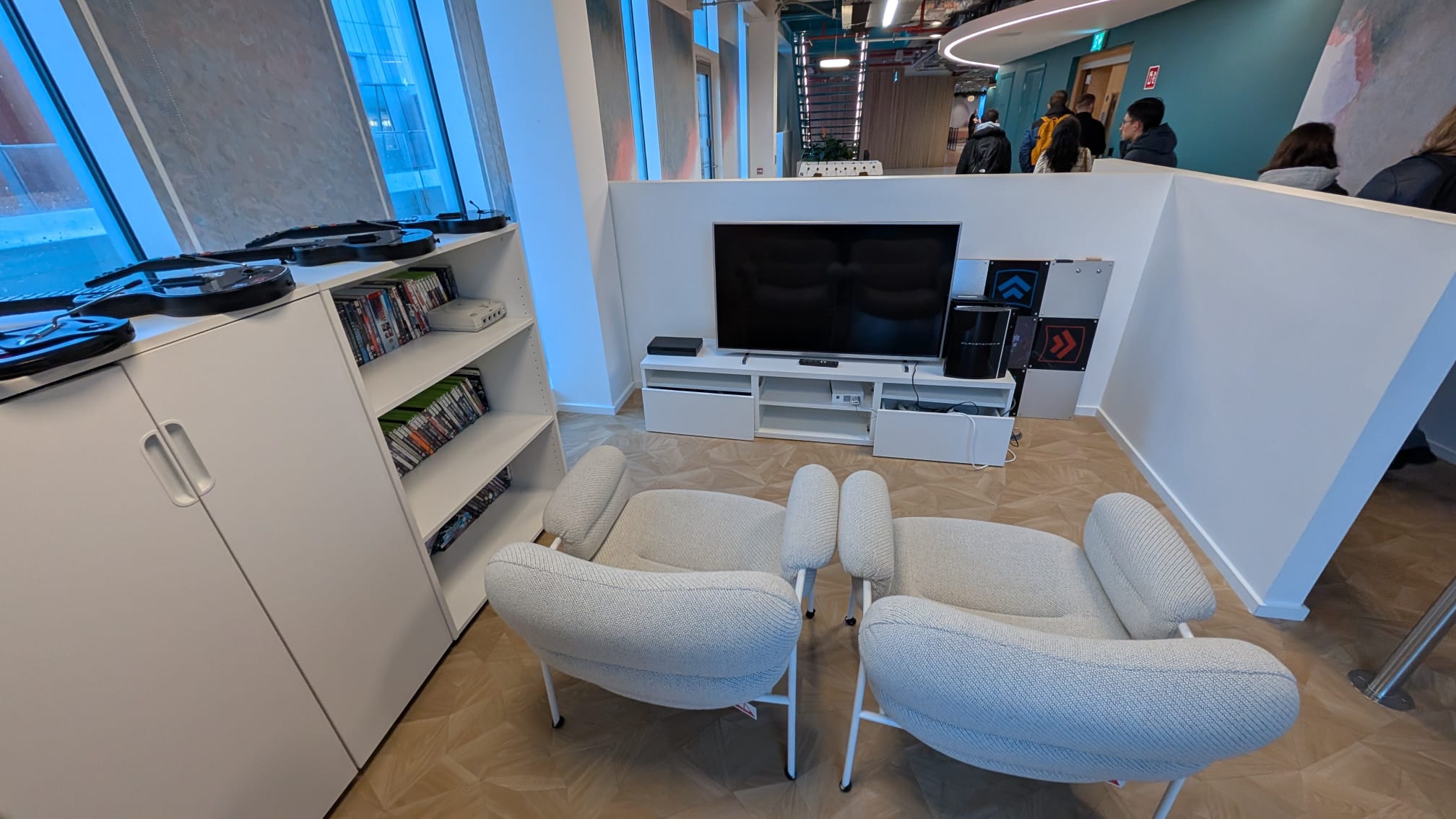
The living room-like spaces packed with gaming consoles.
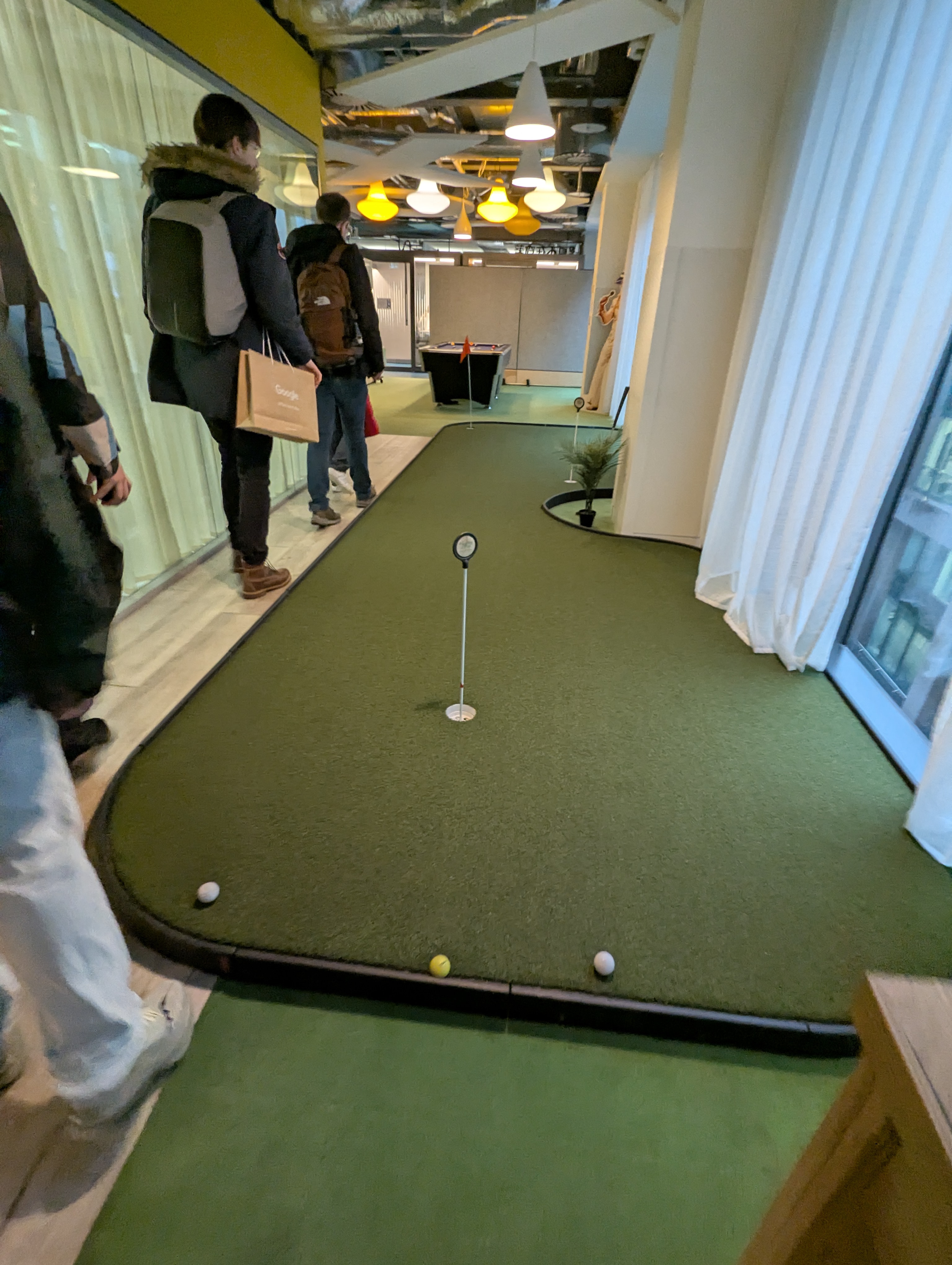
Plenty of entertainment options like Guitar Hero and Dance Dance Revolution.
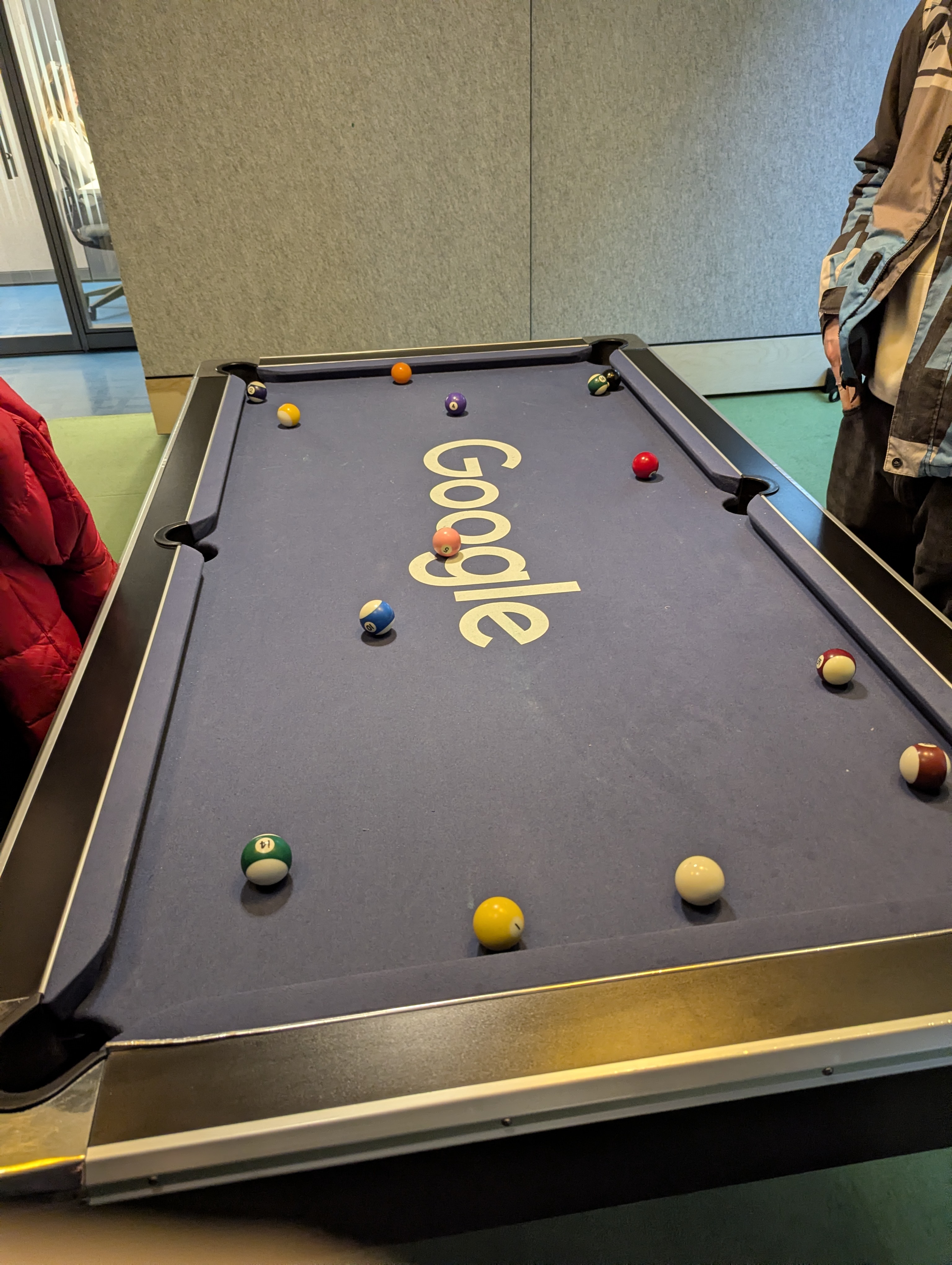
Plenty of entertainment options like Guitar Hero and Dance Dance Revolution.
Gemini Presentation
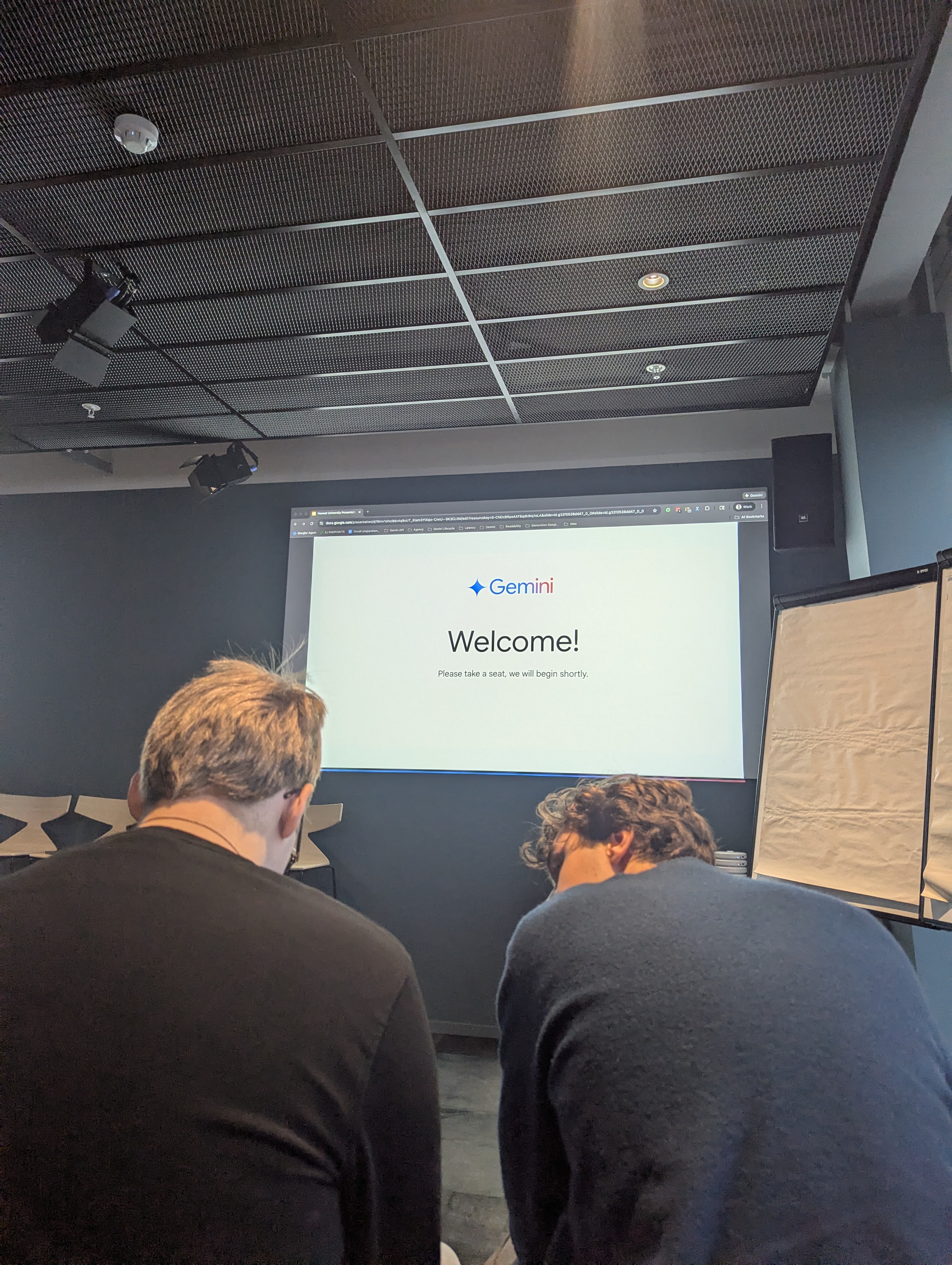
When the tour was finished, they showed us a presentation about Gemini and the challenges of providing its services to all its users. This can be difficult to serve that many people at once.
Prompt Engineering Challenge
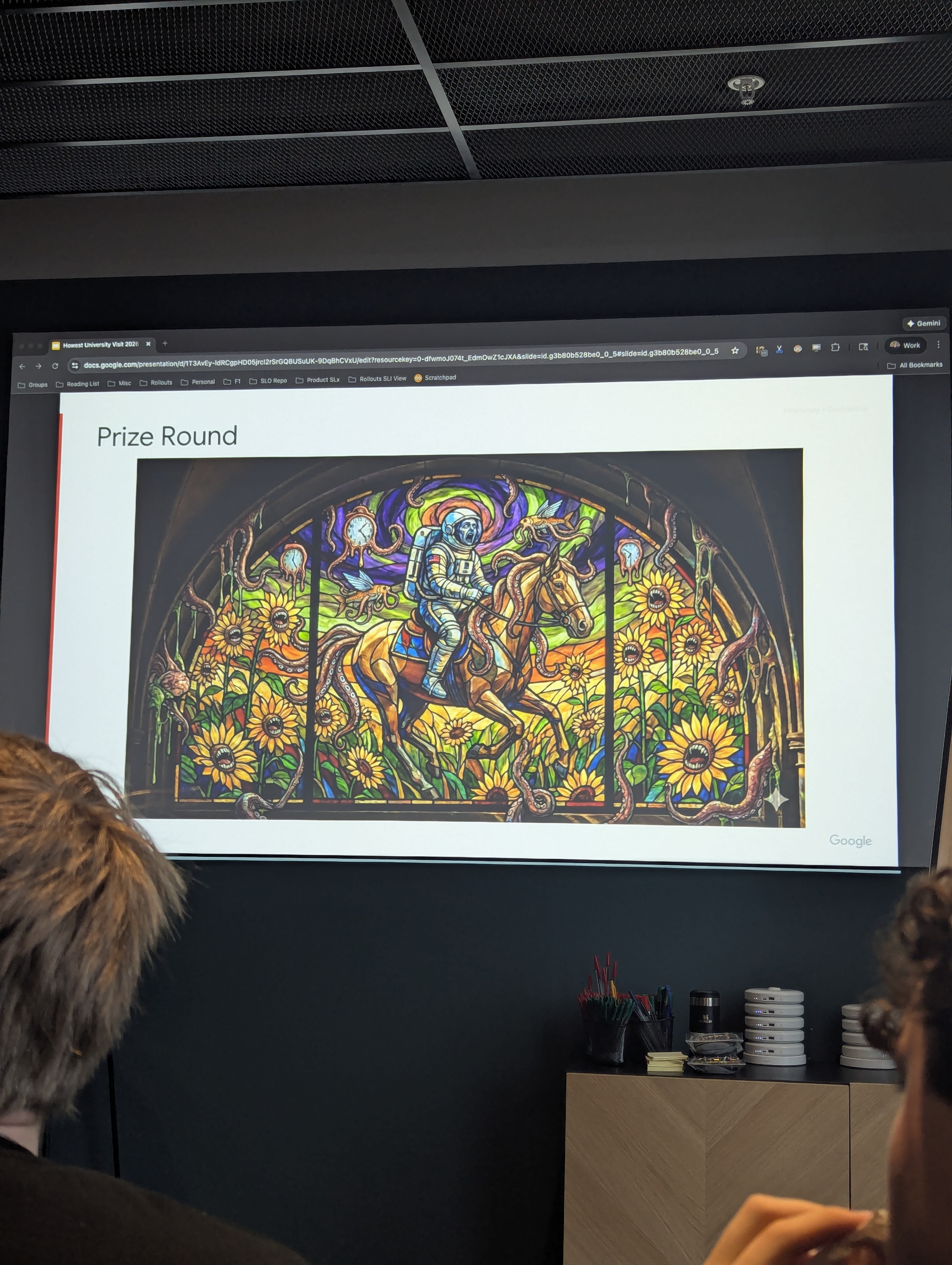
After the presentation, another employee came up and talked about prompt engineering. And as a test to see if we paid attention to slides, they organized a small competition. The Goal was to recreate an image of whatever was shown on the screen through prompt engineering. We had to describe the image as well as possible and give lots of detail on the image.
After the time was up, they came round to check the generated images. They picked the top 5 best images, and they had to come to the front of the room. There the presenter did a final inspection. He then picked his top 3 and awarded the winners their prizes.
Guinness Storehouse
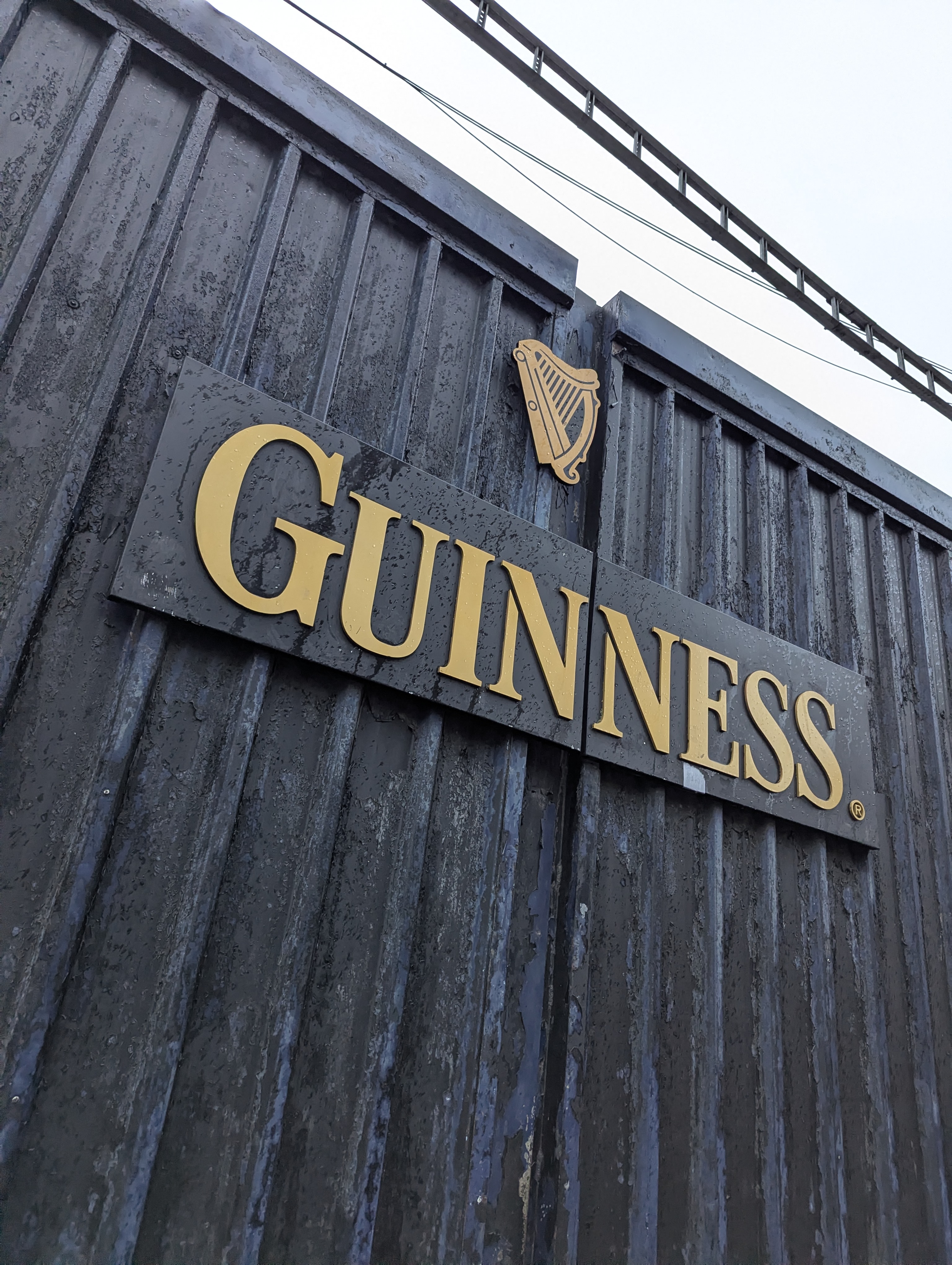
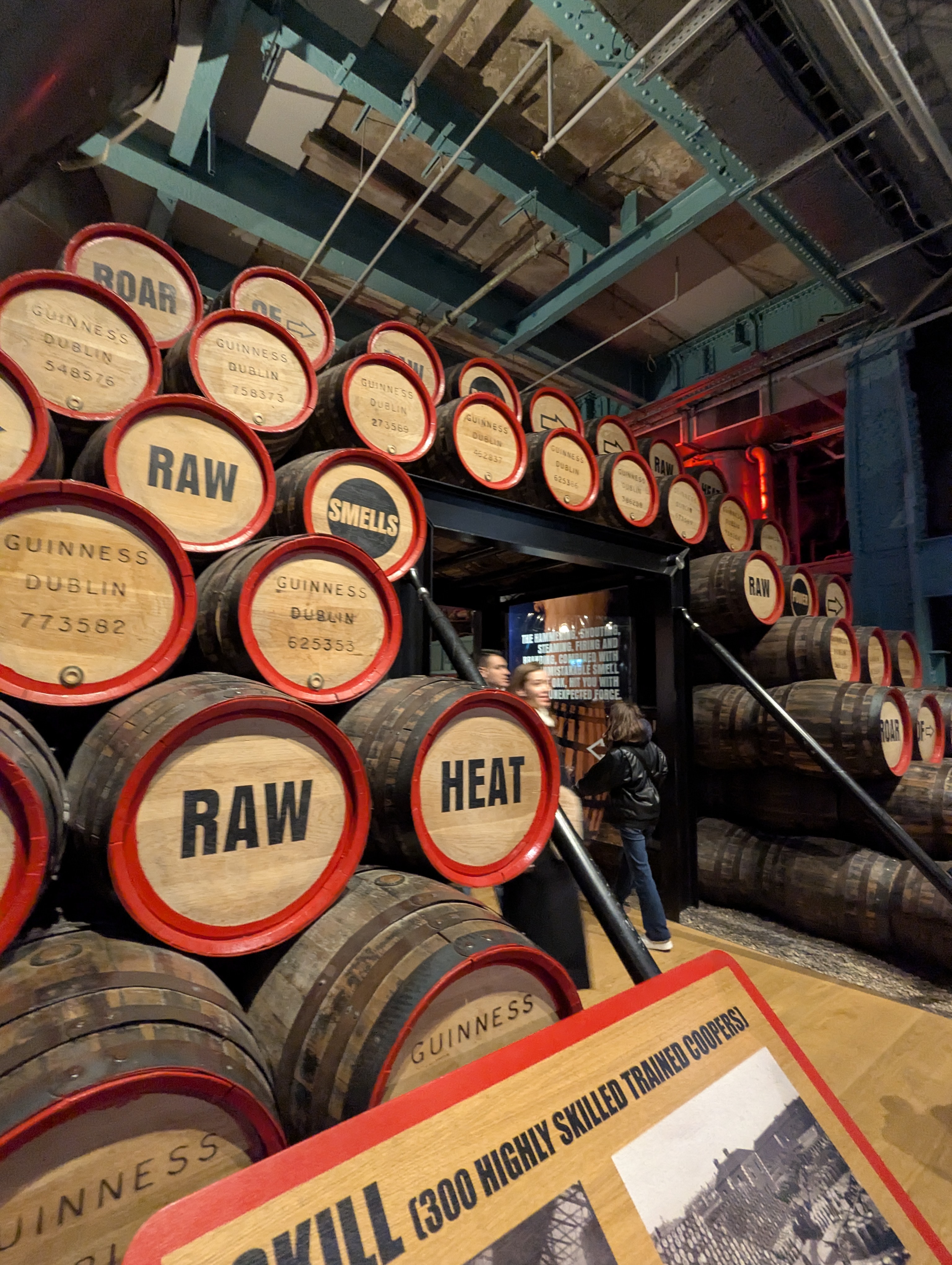
In the afternoon we, visited Guinness. We were allowed to freely explore the museum. The Guinness Storehouse was divided into multiple floors. Each floor told something different about Guinness.
Brewing & Advertising Floors
The first floor was mostly about how Guinness was made. We were shown all the processes of making the beer.
There was another floor about the advertising of the company. On this floor you could view the history of all the advertisements Guinness has produced.
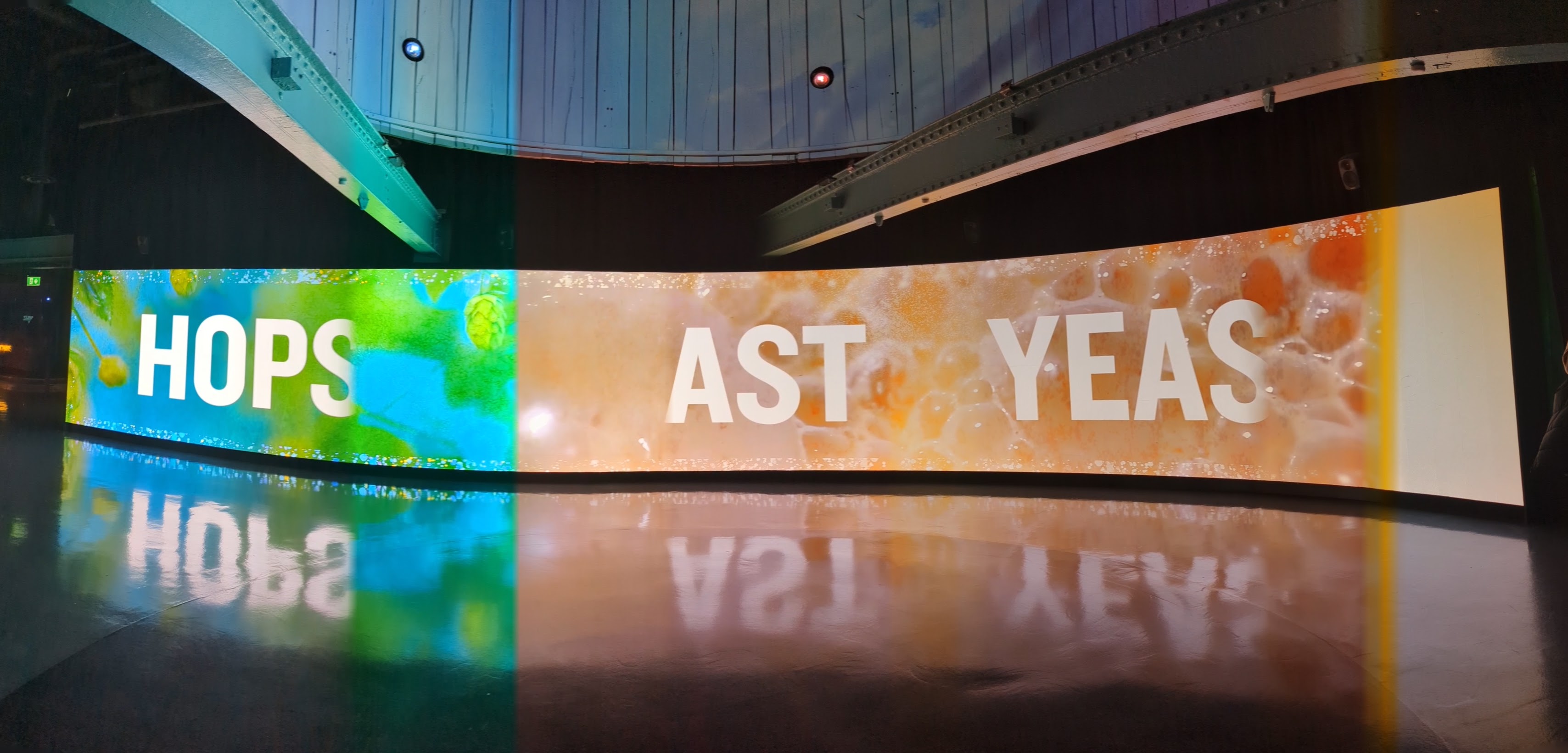
Exhibits breaking down the historical brewing processes.
Walking through decades of iconic creative advertisements.
The Tasting Rooms
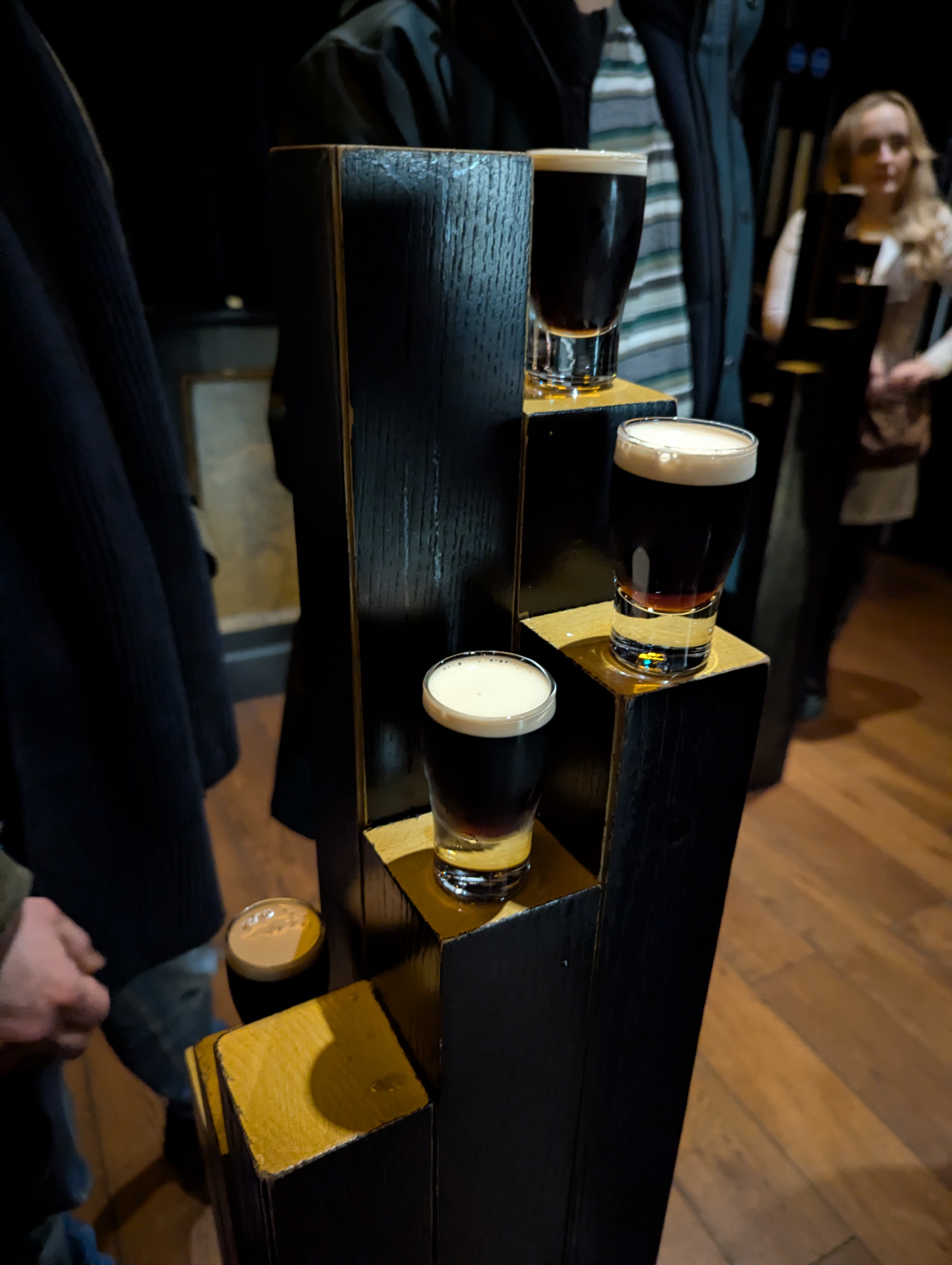
Included in the price of the ticket was a free drink in the Gravity bar (Top floor). But before we went there you could also try a Guinness tasting. First, we were taken to a white room to enhance our senses. In this room there were machines that dispensed the scent of the beer. After we had a chance to smell the beer, we were given a small glass of Guinness and taken to a different room to do the tasting.
Gravity Bar Finish
When we came to the top floor aka the Gravity bar, my friend ordered a Guinness and I ordered a cola. When we did the tasting, I really didn’t like it so that why I went with the soda instead.
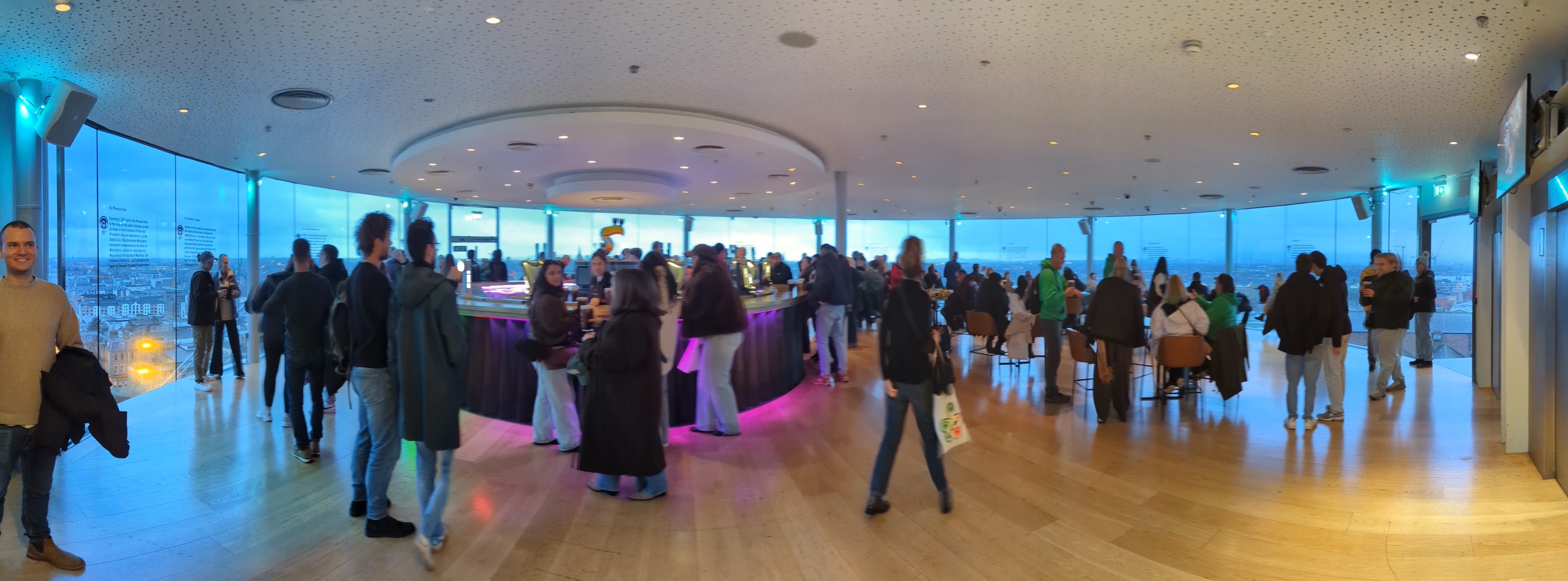
Enjoying a drink up on the top floor with 360-degree city views.
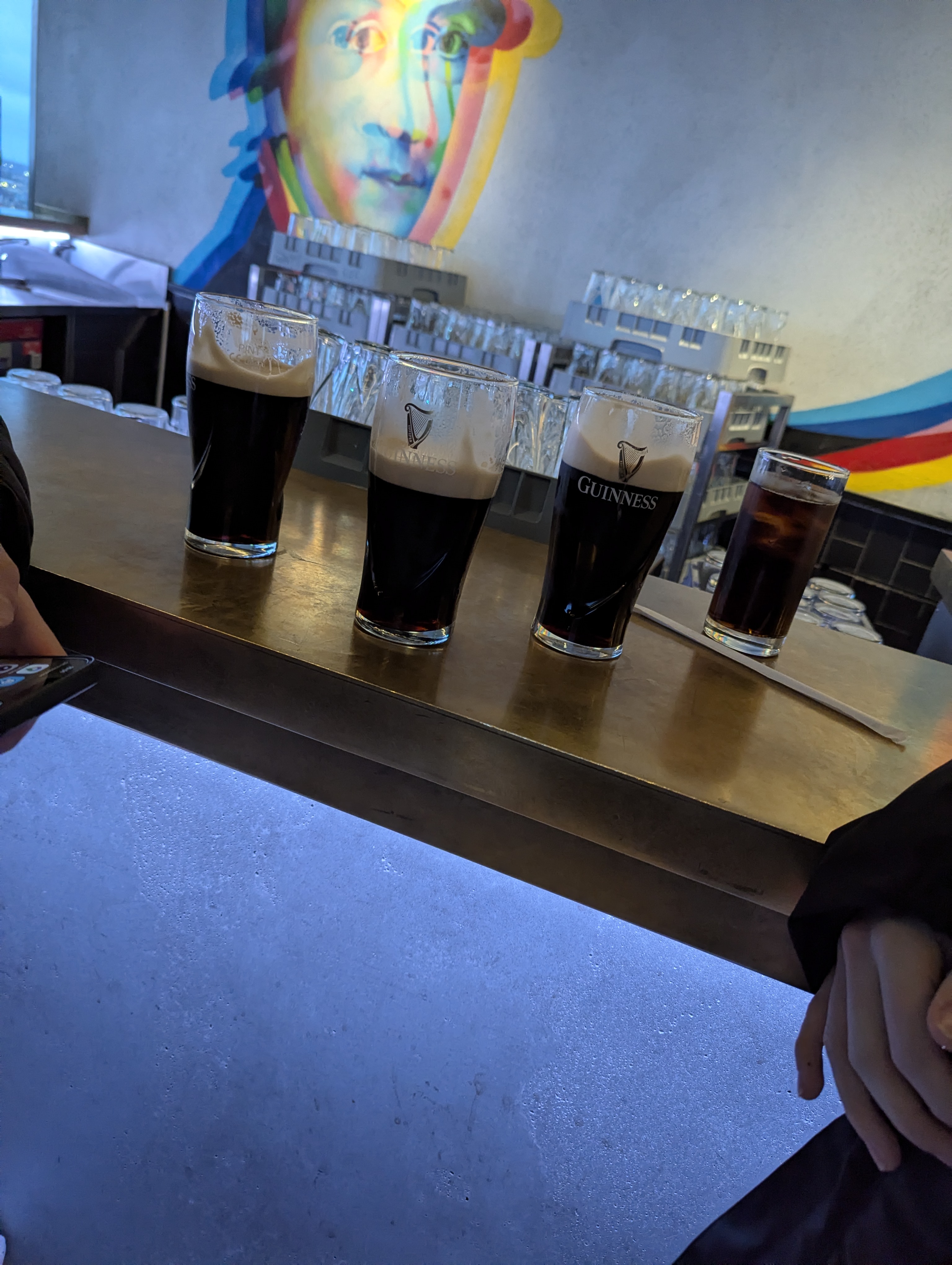
Grabbing a Guinness and a cola at the top bar counter.
Day Five
Friday, 6 February 2026 • Early breakfast, free time & travel home
Allas, the last day of our trip in Dublin had arrived. We had to get breakfast between 7 and 10 and also check out of our hotel before 10 in the morning. For some this proved to be a bit difficult, since a big portion of the group went out to party in Dublin and had allot of fun the night before.
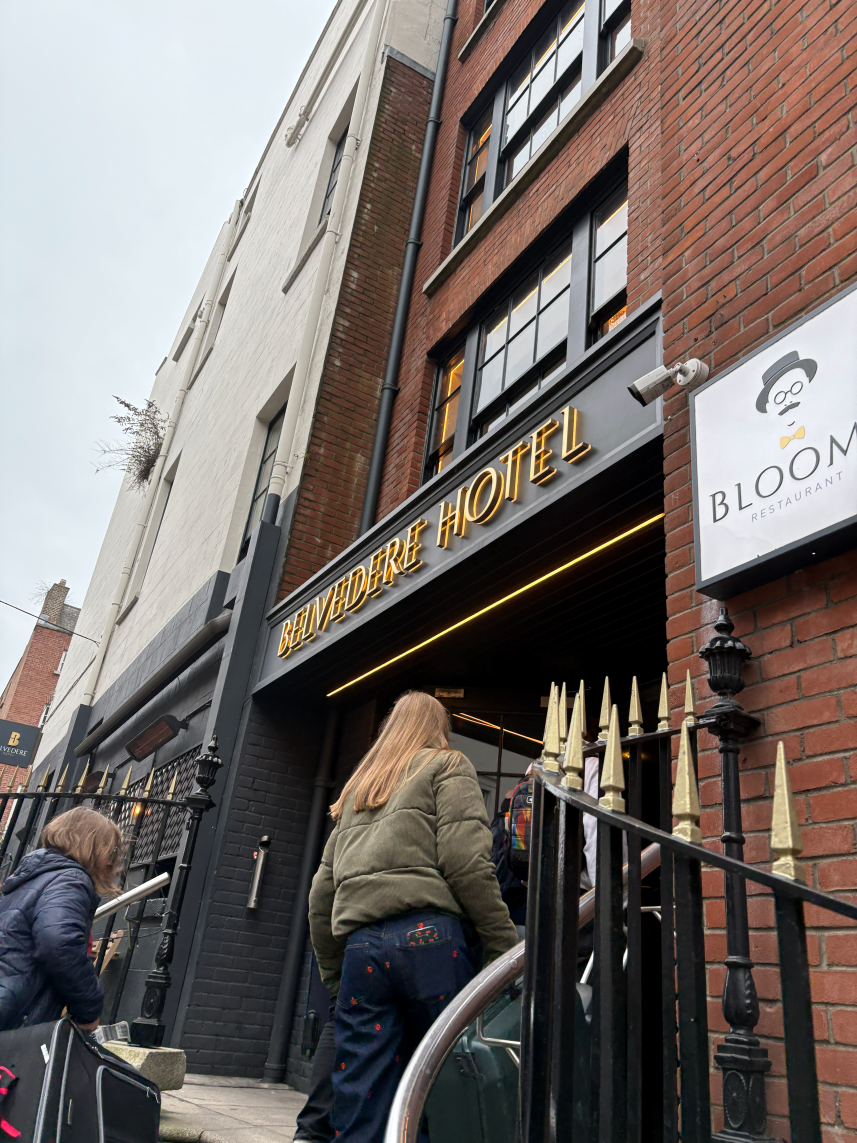
But after enjoying the breakfast buffet of the Belverde hotel one more time we had the possibility to store our baggage in a locked room inside the hotel so we could go explore the city some more without the burden of having to carry it with us.
We got free time from 10 until 13:45 before we had to be back at the hotel to get on the bus to leave to the airport.Souvenirs
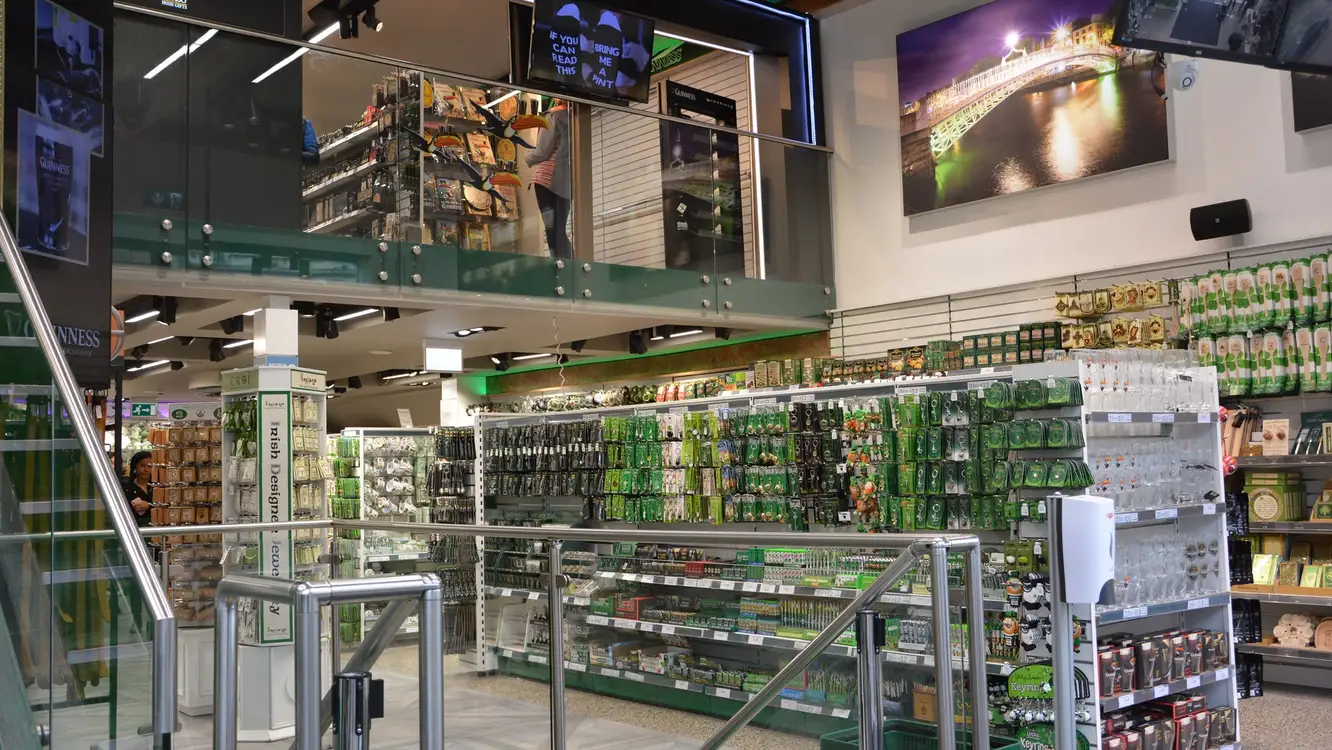
During the free time a popular destination for a lot of people was one of the many Carrol's gift shops in the city. Carrols is a chain of gift shops in Ireland that sells all sorts souvenirs.
Some of us got magnets, some got a t-shirt or a Guiness themed glass.
Whiskey Museum
A group of us went to the whiskey museum in Dublin. The whiskey museum is a museum dedicated to the history of whiskey and the process of making it. Learning more about whiskey was really interesting, and we were very lucky to have a pasionate and funny guide who made the tour even more enjoyable. Some of the things we learned were that whiskey is made from barley, water and yeast and that the process of making whiskey isn't really that difficult, but it does take a long time.
Funny fact about whiskey is that Irish whiskey is aged for 3 years AND 1 day at minimum, thus it being better by default than the Scottish whiskey which is aged for only 3 years at minimum.
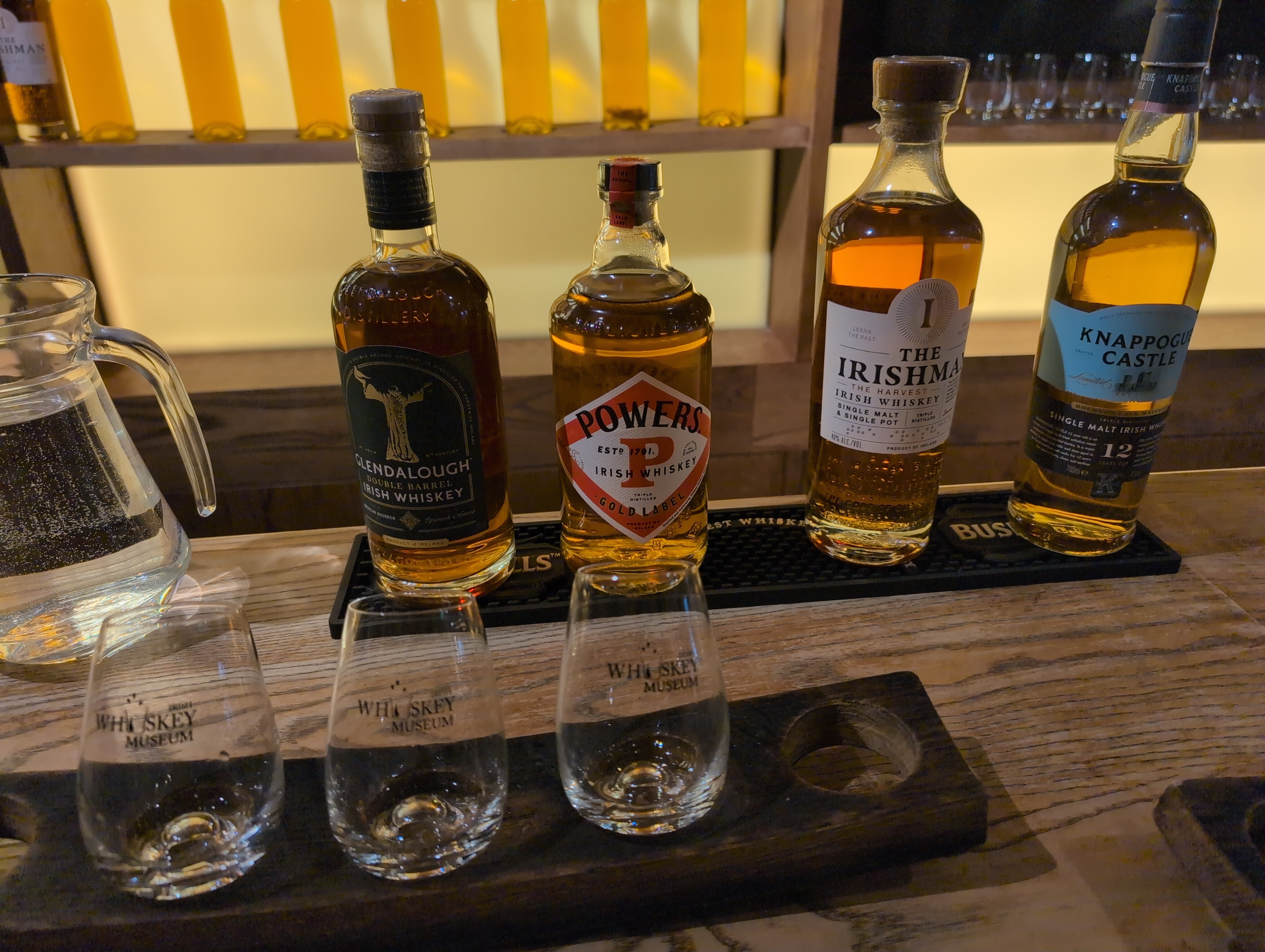
After the tour we got to enjoy a whiskey tasting, where we got to try 3 or 4 whiskeys. It was very interesting to get a few tasting tips on how to properly taste the different taste notes in the wiskey's.
Return home
Around 13:30 Everyone was gathered back at the hotel to retrieve our baggage and get on the bus to the airport. On the bus ride the teachers had planned a quiz about the trip, with questions about the different places we had been to during the Dublin tour on the fist day, general Irish knowledge and of course some questions about the tech visits we had done. The winners of the quiz got a small prize but it was fun for the rest who didn't win as well since some of the questions and answers were really fun.
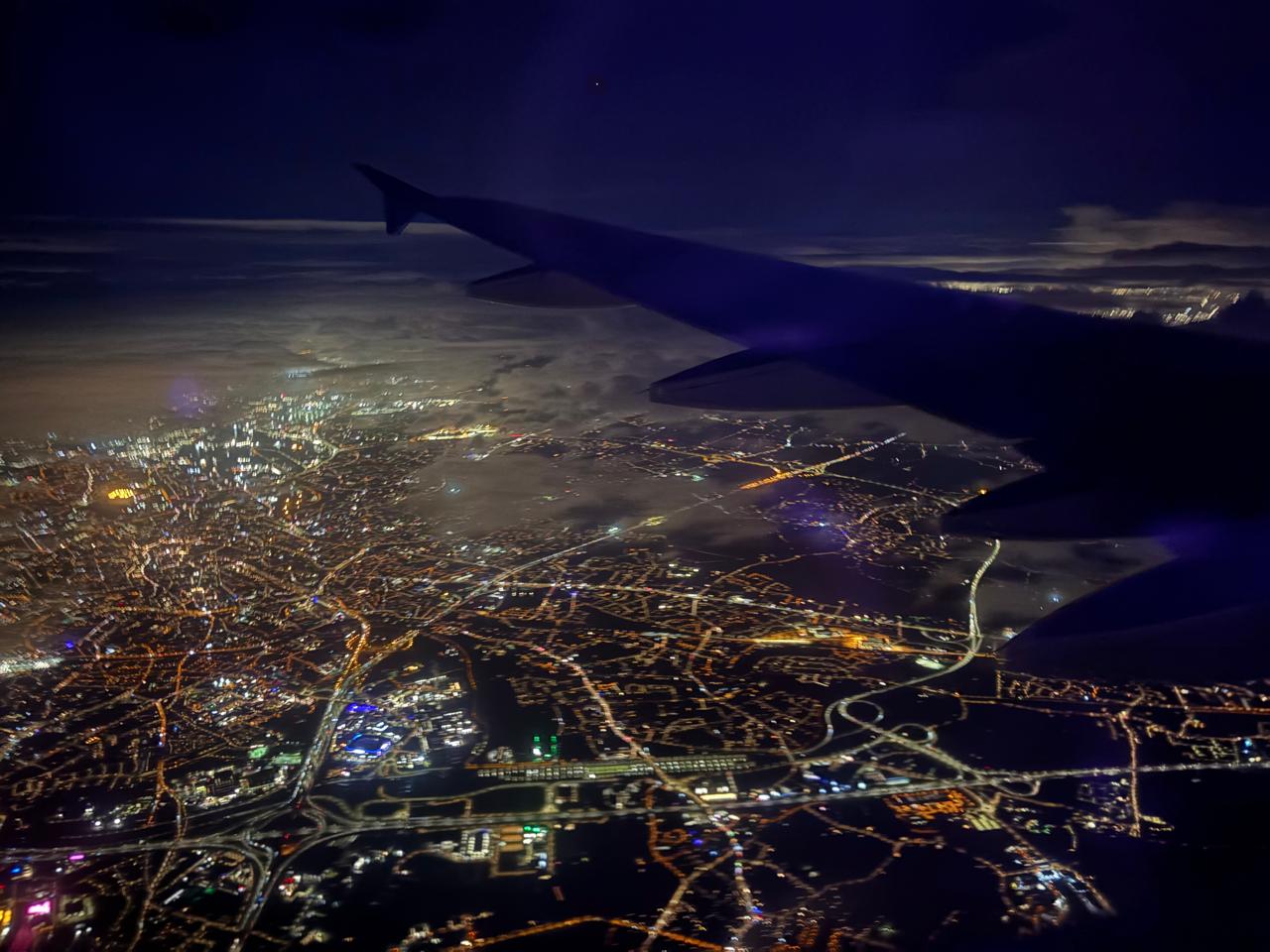
Our flight was supposed to board at 16:30 but we had to wait a bit before we could get on the plane, and thus only arrived in Zaventem Airport a bit after 20:40. This did result in the cool view of the Brussels skyline from above during our landing, which you can see in the picture on the side. After we got our baggage and said our goodbyes we each went on our own way back home, ending our trip to Dublin.
This trip to Dublin was a really fun and memorable experience, and we hope we could share some of that experience with you through this blog.